3:51AM: Inside the First Run of the GT50 Engine
At 3:51 on a Monday morning, in a shipping container in the yard at PC1, the GT50 took its first breath. Bringing the GT50 to life required a sustained, superhuman level of effort. The team worked seven days a week for four months, with machines running 24 hours a day to manufacture and inspect the 438 components needed for the first engine.
27 Aug 2026
Building the GT50 Engine In-House
The single biggest factor in developing the world’s first affordable turbine engine for General Aviation 2.0 is our massively vertically integrated manufacturing strategy. By retaining full-stack control over our manufacturing processes at our UK production centre, we maintain absolute authority over cost, quality, volume, and schedule.
To create the 438 individual components of the GT50, our team built a truly unique global facility featuring:
- An in-house foundry to cast precision superalloy turbine blades, full-ring cooled nozzle guide vanes, and structural components.
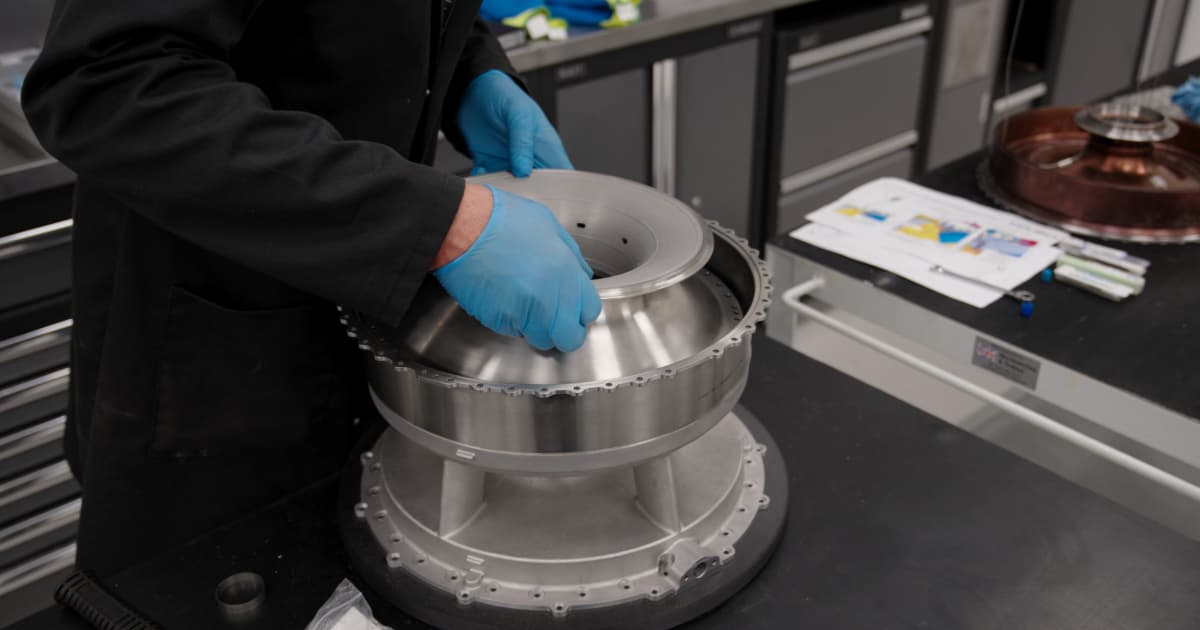
- Precision machining to produce high-speed bearings, gears, dual-orifice fuel nozzles, and high-grade titanium impellers designed to spin at 50,000 RPM.
- Advanced fabrication to precisely press, roll-form, and weld complex superalloy combustors and thin-walled engine casings.
- Precision metrology and temperature-controlled assembly to uphold the tightest possible tolerances and production controls.
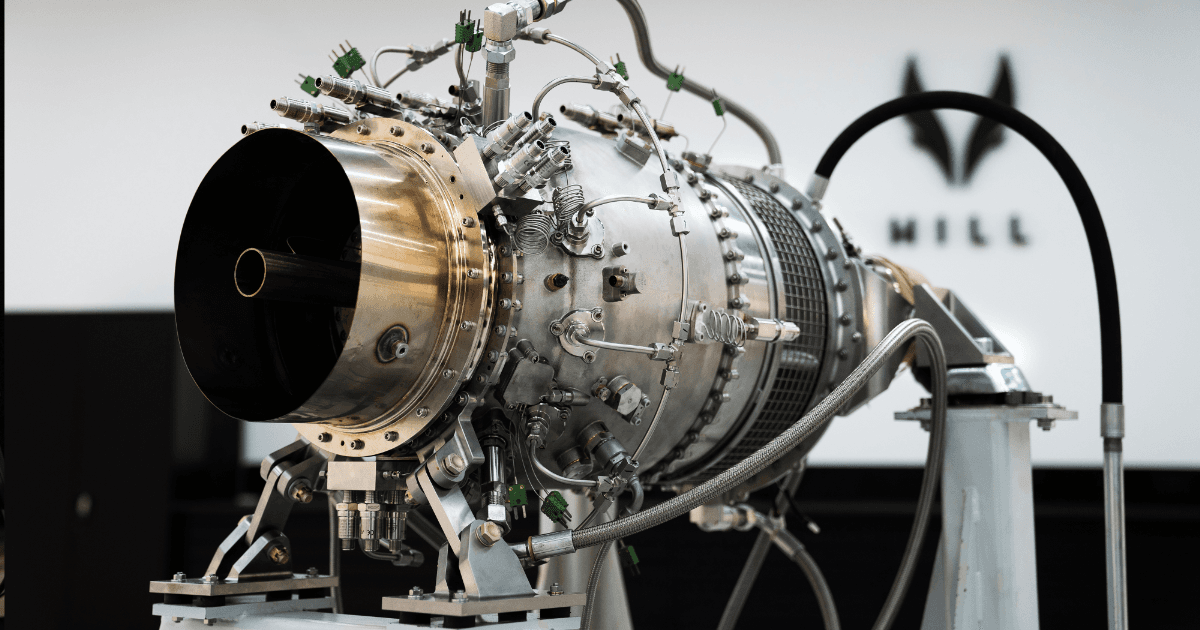
The countdown: four months to ignition
With four months to go, we were still desperately getting the last components out of the design office, through the release programme and into Mark's hands so the manufacturing team could get going. As you come out of the 3D world into detailed design, you find all the little details you'd missed — seal clearances, tolerances, oversights on manufacturing order — and sorting that out just takes ages.
You could sense the apprehension as designers handed over their finished drawings to production, very much like handing in homework about to be marked. Our experience since: the sooner you let it go, build it and test it, the better, that's when the real learning starts.
Getting parts released was just the start of the fight for Mark, coordinating the enormous logistical task of manufacturing all 438 components for the very first time — every part, jig and fixture, every detailed process, in sequence. Plating, heat treatment, inspection, X-ray, NDT — a plethora of steps coordinated so we never bottlenecked production.
Relentless effort, and the human cost
The team worked seven days a week for four months, with machines running 24 hours a day and people coming in of an evening to swap programs and reload machines. That level of sustained work rate takes a huge toll — not just on the people here, but on their families, wives and kids who are missing out. We owe all of them a deep debt of gratitude. Without that superhuman effort and commitment, this would never have got done.
Two months out: every part, under one roof
With two months to go, manufacturing was flying through the build. From raw materials, under one roof, we had:
- Machined and inspected high-grade titanium impellers designed to spin at 50,000 RPM.
- Complex, thin-walled engine casings from aluminium, steel and nickel-based alloys.
- Elaborate fabricated combustors, painstakingly pressed, roll-formed and welded from nickel-based superalloys.
- Superalloy turbine discs machined to unimaginable tolerances, including precision curvic couplings and fir-tree blade roots.
- Cast precision turbine blades from superalloy materials; precision-ground fir-tree roots; pressed locking clips.
- Cast full-ring, cooled nozzle guide vanes from superalloys.
- Machined, fabricated and vacuum-brazed high-efficiency vane diffusers from high-grade steels.
- Intricate dual-orifice fuel nozzles.
- Our first high-precision, high-speed bearings designed to run at 50,000 RPM.
- The first high-speed gears for the accessory and speed reduction gearboxes.
Pragmatic Engineering and Rigorous Testing
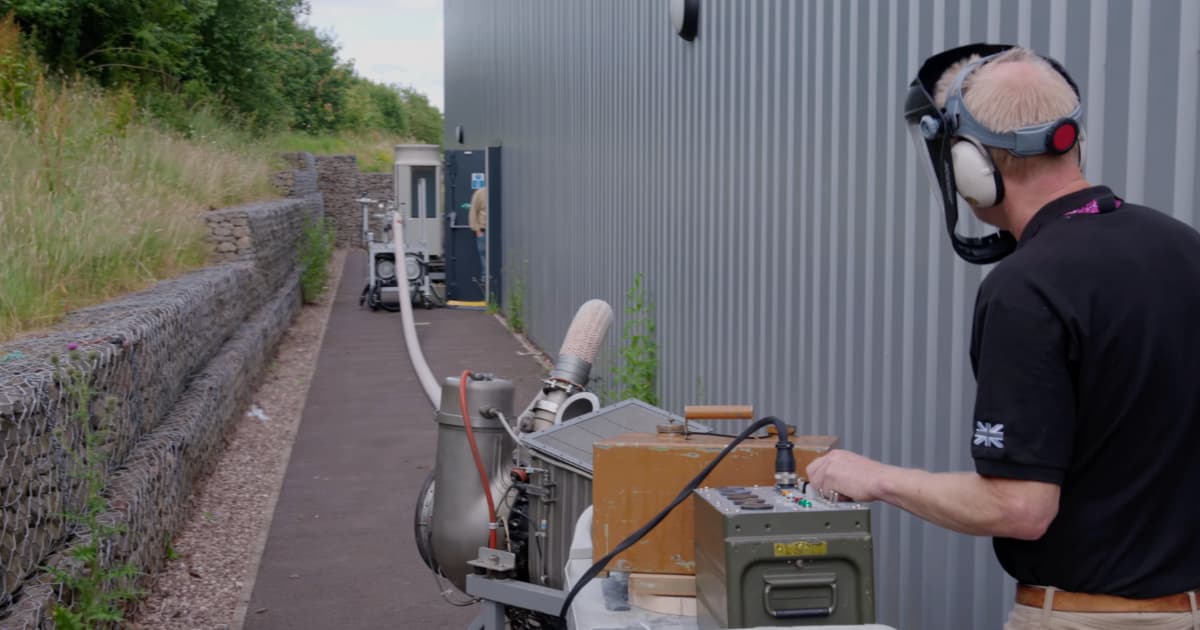
When it came to testing, we shunned unnecessary complexity in favour of field-proven, pragmatic approaches. To conduct our combustion tests, rather than building elaborate and expensive infrastructure, we utilised a vintage air starter unit to provide the hot compressed air needed. Within a week, we had both the fuel and combustion systems working beautifully.
One month out: the test cell
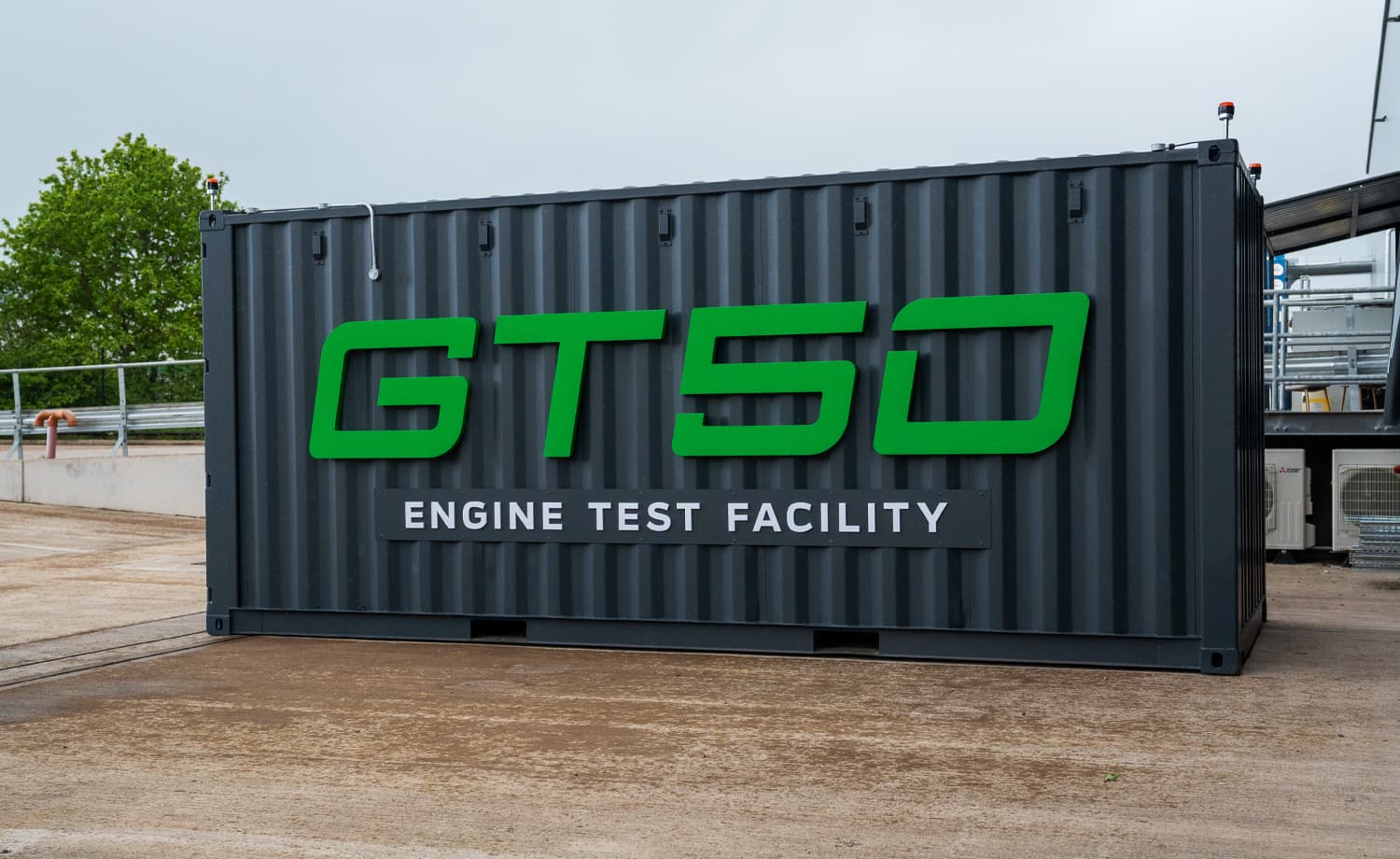
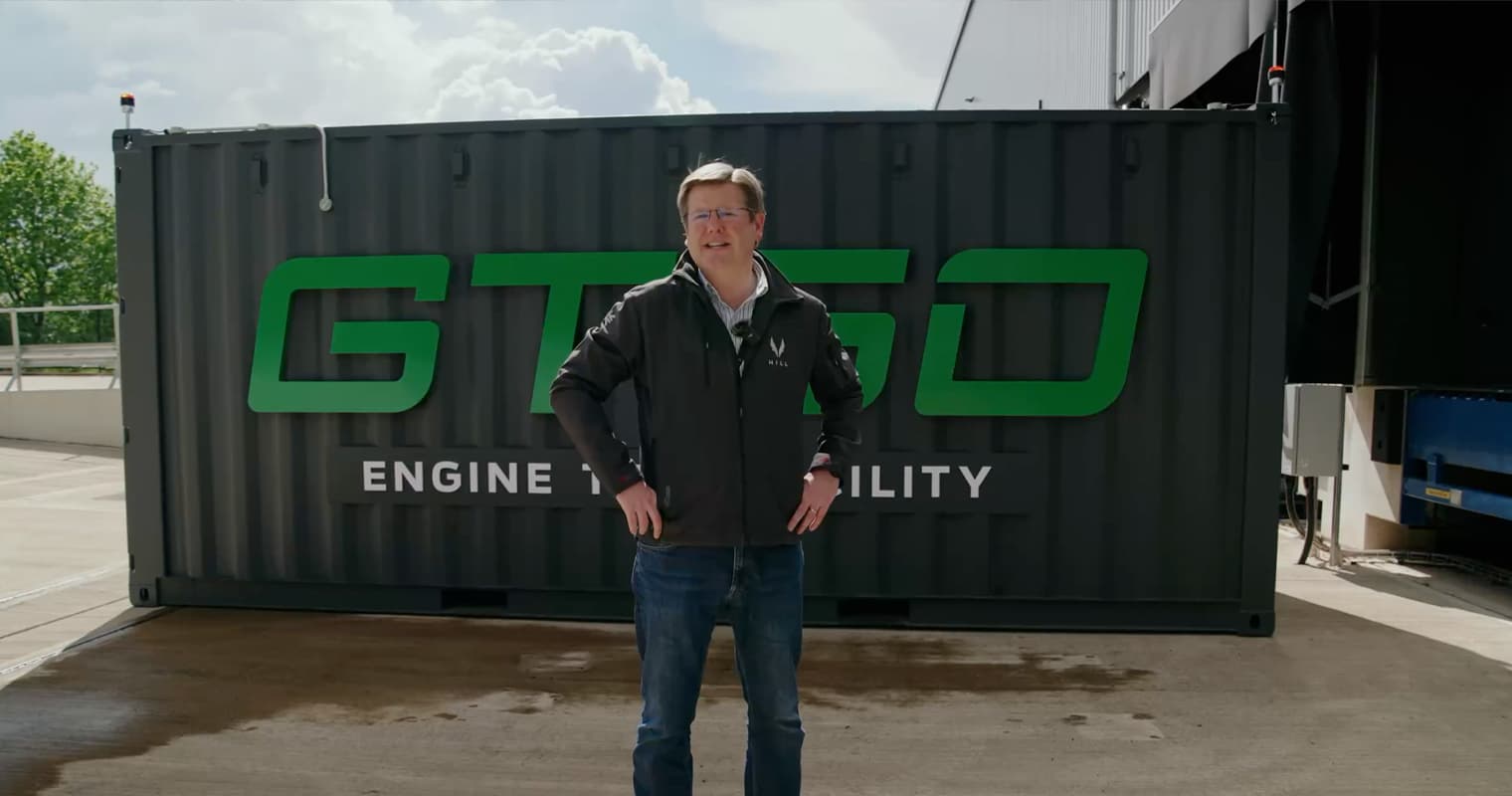
Testing gas turbine engines is not a game — it's potentially very dangerous, and we have to execute every test safely and responsibly. The most pragmatic approach was to establish a secure test cell within a shipping container in our yard, meticulously instrumenting the engine with a complex web of sensors and hypodermic tubing. This allowed us to measure temperatures, pressures, flow rates, and vibration, ensuring we could assess both the thermodynamic efficiency and the mechanical health of the GT50.
Two weeks out: the combustion problem and a pragmatic fix
About two weeks prior to ignition, we hit our first major problem. The complex control and instrumentation system developed on Rufus 1 and planned for the Rufus 3 test rig — then to be ported onto the engine — was falling behind schedule, with niggly system-engineering problems you can never predict. Without a control system, we couldn't run combustion testing, couldn't complete the combustor setup, and couldn't run the engine. We needed to change tack.
We introduced Ian to the team, a prolific gas turbine engine collector with huge practical experience owning and operating ground-based turbines. We implemented a simple manual control system for fuel and air, using a mixture of digital and old-world analogue gauges. The results were immediate. We could run a test first thing, modify the design by lunchtime, remanufacture the next set of components overnight, and test again the very next day. Within a week, both fuel and combustion systems were working well enough to run in the very first GT50.
We then needed a supply of hot compressed air to push the combustor to its operating points. Every option we'd considered was complex, enormous and expensive. It had never occurred to us we could inexpensively access an existing gas turbine engine designed as an air starter for a bigger engine. As it turns out, Ian had three units once used to start RB211 engines in his garage. We stuck Ian in a van, brought one up, made a few adapters, and the next day we were testing. The harder we drove the combustion system, the better it worked — stable flame, properly contained, recirculation zone and swirlers doing exactly what we wanted.
One week out: instrumentation, and a four-hour production reality
With a week to go, attention turned to installing the instrumentation for the development engine; and we were tearing our hair out burying a complex web of pipes, wires and sensors deep into the engine. As Eric Welch, who supports the GT50 programme with instrumentation and control systems, explains: given this is our first engine, we intentionally placed a lot of sensors to assess both mechanical health — temperatures, speeds, vibration — and thermodynamic efficiency.
The problem: data must come from sensors in totally inaccessible areas, routed via a mess of wires and hypodermic tubing through tiny passageways out to the data acquisition system, all sealed for pressure integrity, all done while the engine is being assembled. It was a total nightmare. Chris fed the big casing down while we pulled cables through; Jason broke two hypodermic needles and was duly banned from the shop floor.
We were also designing, manufacturing and using jigs, fixtures and specialist tooling on the fly — every new component more often than not needing its own fixture. But here's the revealing part: take the instrumentation and the stop-start tooling development out of the equation, and it takes one person about four hours to produce a GT50. Scaling to high-volume production isn't a daunting task at all.
The final 48 hours: getting the engine to the bench
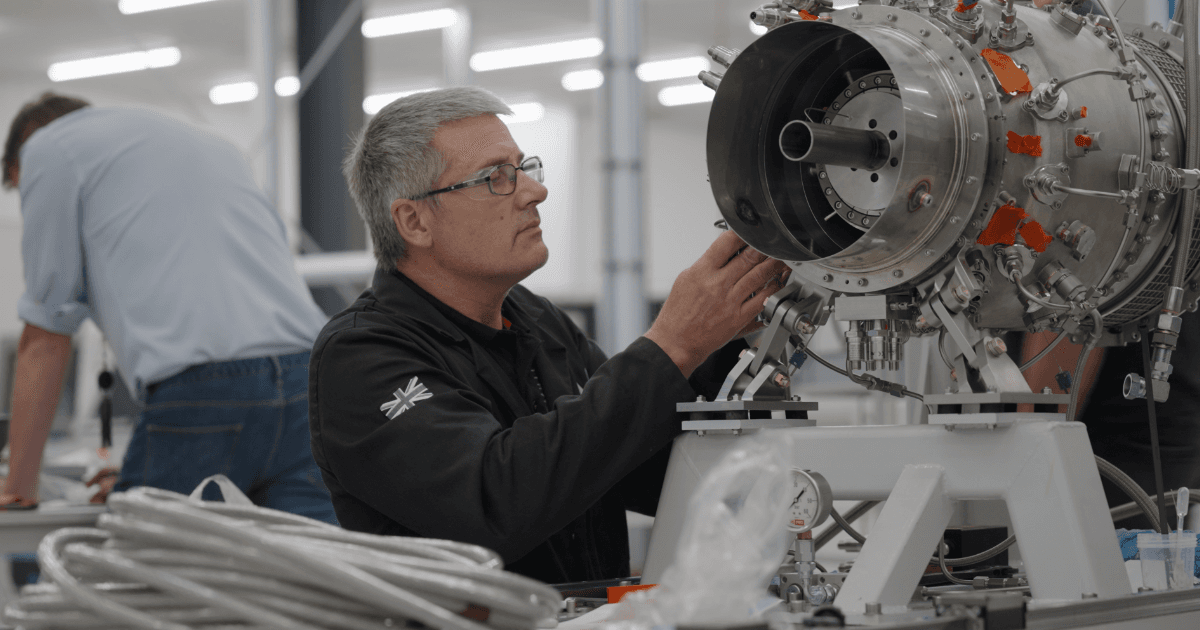
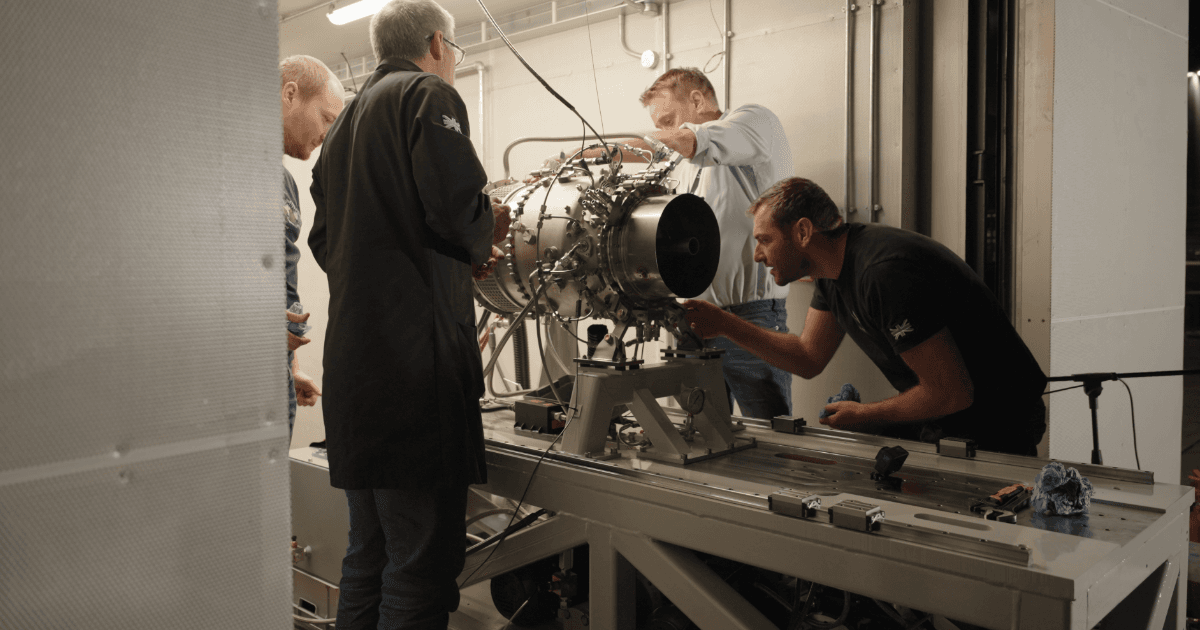
With 48 hours to ignition, we'd completed everything possible in the vertical build position and needed to roll the engine over and mount it on the test bench. Two slight oversights surfaced. First, we built the engine in the mechanical assembly lab upstairs, and we currently don't have a lift. The only way down was onto a pallet, round to the loading bay, and very carefully lowered on a forklift. A nervous moment, with a sigh of relief when it reached ground level.
Second, the engine was delivered vertical and we had to turn it horizontal, and at the design stage we hadn't provisioned proper lifting eyes. More tacked-on lifting plates, another nervous moment, but we got it onto the bed without damage. That was the first point I thought: we've got an engine.
The final 12 hours: a first drink of Jet A-1
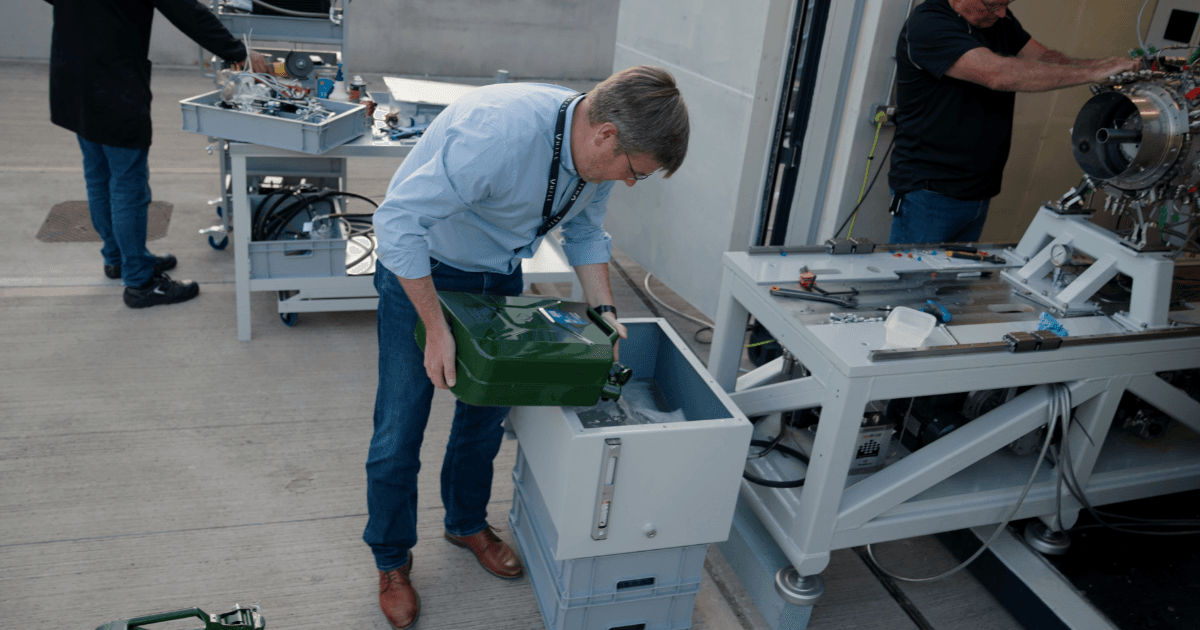
With about 12 hours to go, everything was built, assembled and tested, and it was time to move the engine out to the test cell. We forklifted it carefully through the factory walkways, one of us on every corner. For the first low-speed runs — lubrication, cold cranking and initial self-sustaining — we turned the rig half in and half out of the container, so the team could get in and around the engine during commissioning. Then I'm particularly proud to say I gave the very first GT50 its very first drink of Jet A-1.
Four hours out: the lubrication lesson
With the rig connected — electrical power, lubrication, cooling, instrumentation and control all online — we began shaking down the life-support systems. The lubrication system came first, for two reasons. It's critical to get sufficient cooling and lubrication to the high-speed bearings; without it, the rotor would seize and destroy the engine. And it's vital to get the oil quantity just right: too little and bearings and gears overheat from friction; perversely, too much and high-speed components froth the oil into foam, generating heat through viscous shear against every component, also causing overheating.
We brought the air-oil heat exchanger, scavenge pumps and pressure pumps online. For a moment, everything was great. Then Mark noticed a leak from the rear — oil everywhere, casing dripping. By this point we'd been going about 19 hours. At the front, oil was coming out of the accessory gearbox air-oil separator vent. The GT50 is a dry-sump engine; there shouldn't be residual oil in those casings. We'd got the pressure and scavenge rates wrong — pumping more in than we were scavenging out, force-feeding our newborn engine with oil.
We shut down, scavenged the excess, and did some simple bucket engineering — physically measuring exactly what each pressure and scavenge pump was delivering and returning. We quickly identified we weren't scavenging what we thought. Recalibrate: scavenge pumps a little quicker, pressure pumps a little slower. The system rebalanced, and we went again.
T-minus two hours
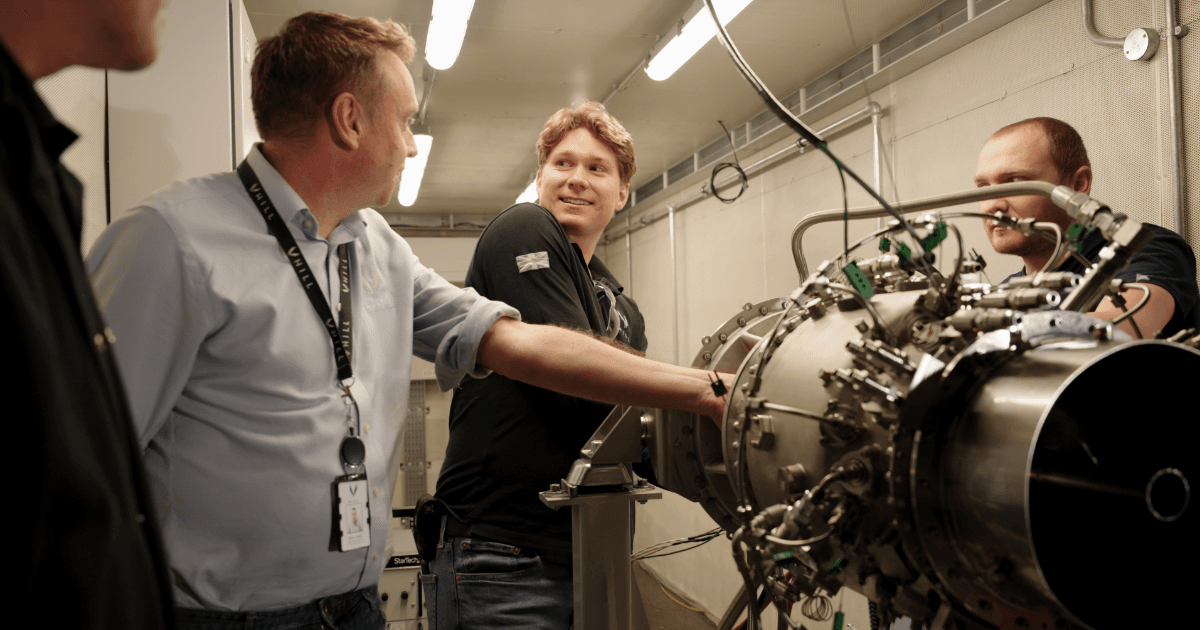
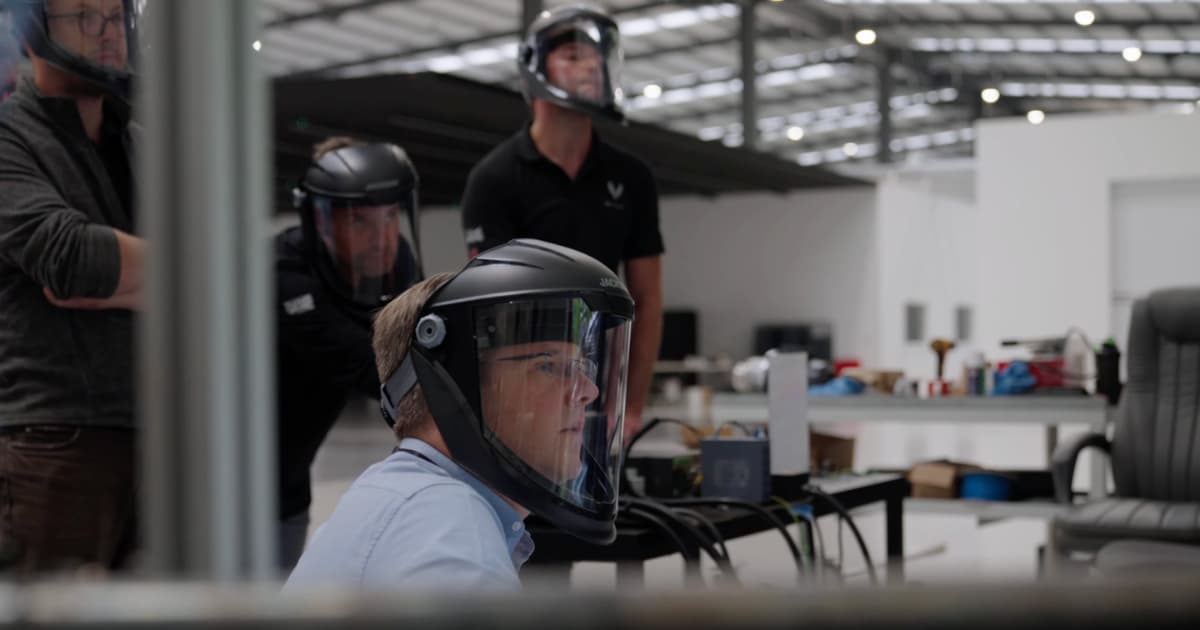
Two hours from ignition, the rotor moved in the engine for the first time, driven purely by the starter motor, through the full speed range the starter can manage. This is the test that tells you whether you have mechanical rubs, rotor dynamic instabilities, vibration problems, or anything unpleasant happening in the bearings or gears.
At around 1,000 RPM it was silent. Completely silent. No vibration whatsoever, you could not tell the engine was turning, and even the starter was quiet.
We increased speed progressively. Somewhere around 2,000 RPM there was the faintest sense of a rattle, a small axial vibration from the accessory gearbox. Mark was convinced it was nothing, and we had seen similar things before with the starter-generator, so we pushed a little further to see whether we would drive through whatever was exciting it. It quietened, and quietened again, and before long the engine was running stably at 10,000 RPM on the starter. Quiet. Happy. Smooth. No discernible vibration, on the first set of bearings we have ever made, after that rotor had been assembled and stripped more times than anyone cares to count.
That was the moment the manufacturing team knew it was all going to come together.
Ignition: first breath at 3:51am
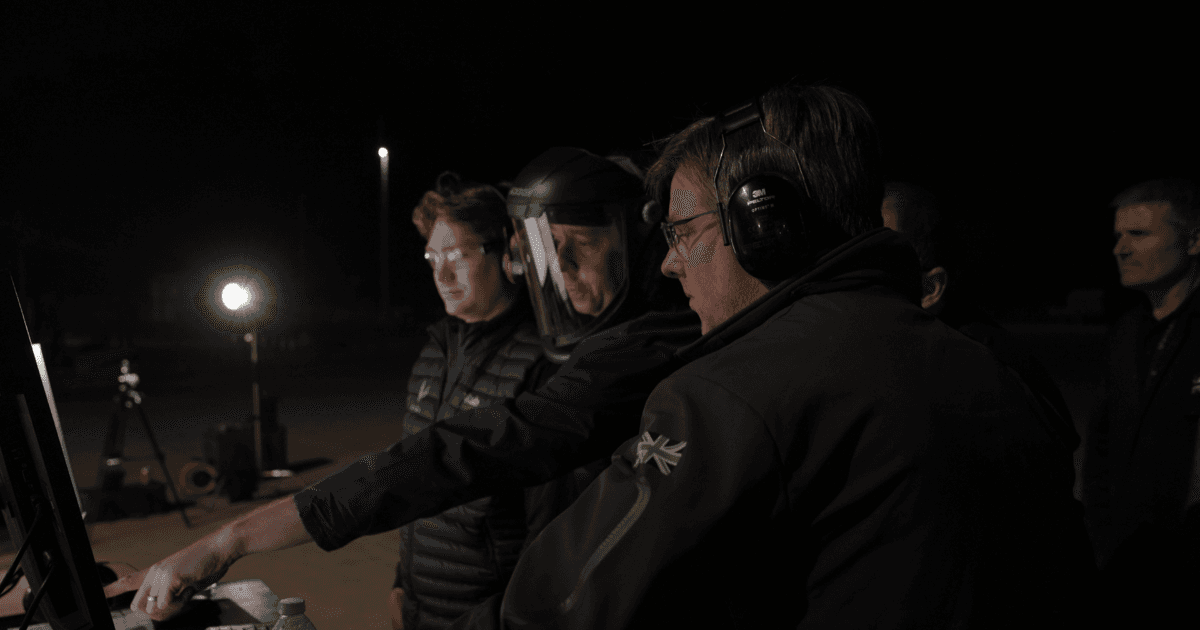
Suddenly there's nothing else left to do. Thirty years of your life have passed by, leading to this moment and now it's time to see if you can live up to all those promises.
Five. Four. Three. Two. One.
Eric said "I'm out," and Jason threw his arms in the air. Self-sustaining. 27,000 RPM on the screen. We'd done a 23-hour shift and everyone was on their knees, but the adrenaline and the moment got the best of them.
We weren't even planning to have it self-sustaining that night. And there's something very poetic about the engine taking its first breath as the sun came up at 3:51 in the morning, after such a monumental effort from everybody involved.
Days like that are the ones you never forget. They make all of it worthwhile. Nobody here believes it could have gone any better.

JOIN OUR GROUP PRESENTATION
Are you interested in the HX50? Book your spot in our group presentation and learn why the HX50 will be better than your current helicopter.
What's in the presentation
Who
Mischa Gelb (aka Pilot Yellow) and Ruben Dias
What
Exclusive full details about the HX50 not yet available to the public
How
30-minute presentation + Q&A
Be part of the journey
Get all the relevant news and updates about the HX50 delivered to your inbox.

HX50
Exterior Concept
Interior Concept
GT50 Turbine Engine
General Aviation 2.0
Hill Digital Cockpit
News & Stories
Technical Details
Range Simulator
Journey to HX50
ADDRESS
Hill Helicopters
Unit 3, Shackleton Way
Stafford, ST16 1GY
United Kingdom
Contact
General Enquiries:
+44 (0) 1384 590700
Accounts:
+44 (0) 1384 590700
Sales:
+44 (0) 1889 228040
hello@hillhelicopters.com
ADDRESS
Hill Helicopters
Unit 3, Shackleton Way
Stafford, ST16 1GY
United Kingdom
© 2026 HILL HELICOPTERS