GT50 Combustion System Passes Ground Idle Checkpoint
"A lot of the time in development programmes like this, the days are long and hard, and you're just battling, trying to solve one problem after another, after another, after another. Today hasn't been one of those days. Today has been a really, really good day." - Jason Hill
3 Jul 2026
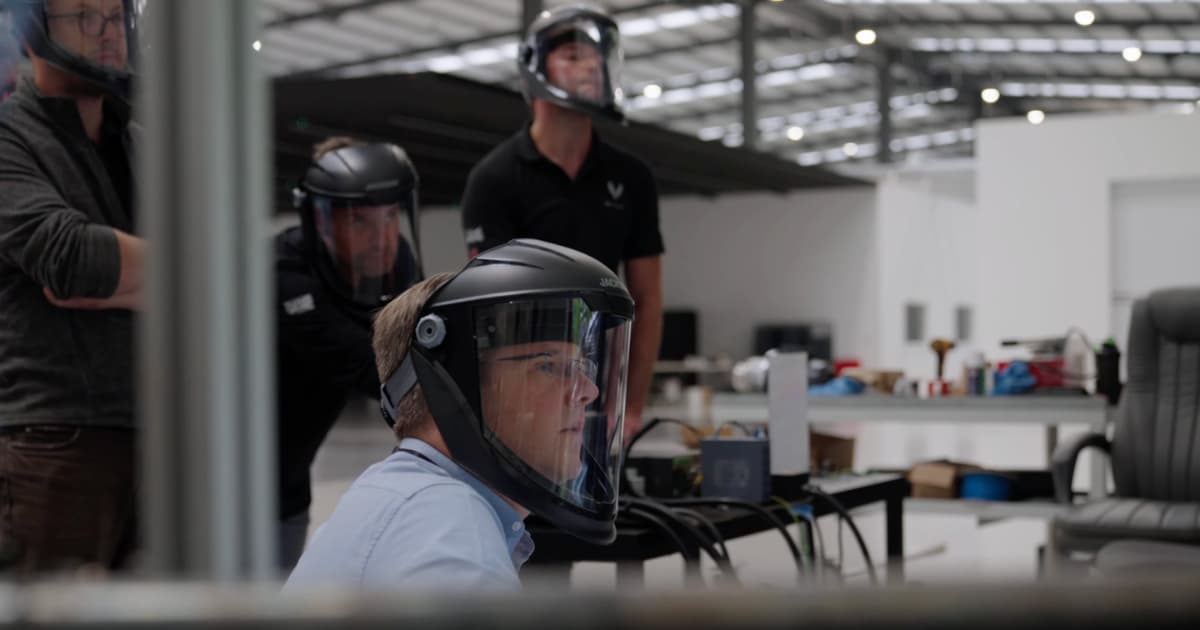
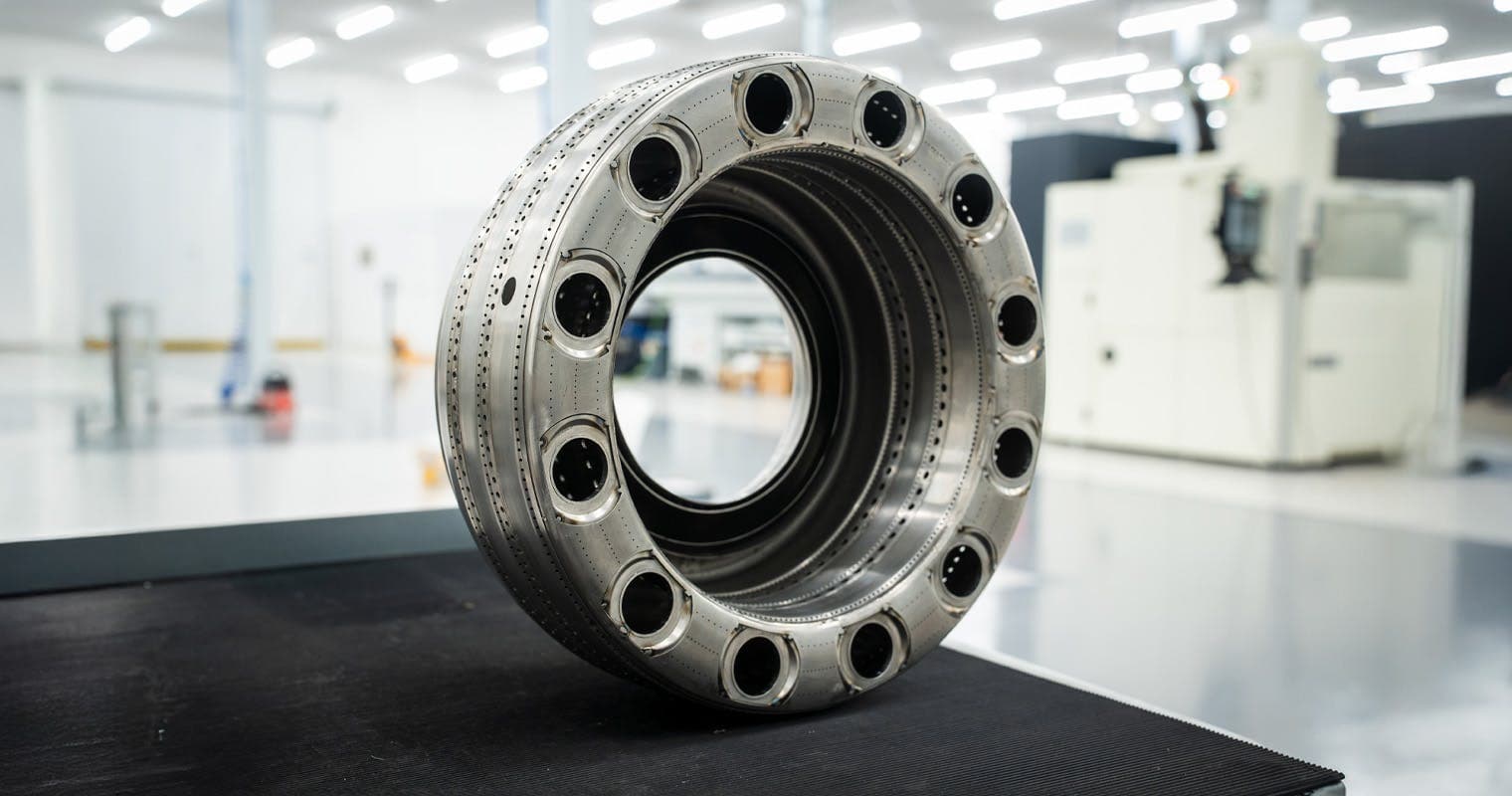
At Production Centre One this week, our team reached a pivotal milestone in the GT50 programme. After two weeks of intensive work commissioning the combustion system, we have successfully driven it beyond ground idle — confirming the core of our proprietary turbine performs exactly as designed. Alongside this breakthrough, the prototype gas generator is nearing completion in our mechanical assembly lab, with full engine assembly expected by the weekend.
Phase by Phase: Commissioning the GT50 Combustion System
Over the past fortnight, the team has been systematically de-risking the GT50's combustion system. As Jason explains, the objective has been to ensure that "when we run the engine for the first time, we don't damage any of the valuable prototype hardware."
Ignition and Stable Flame
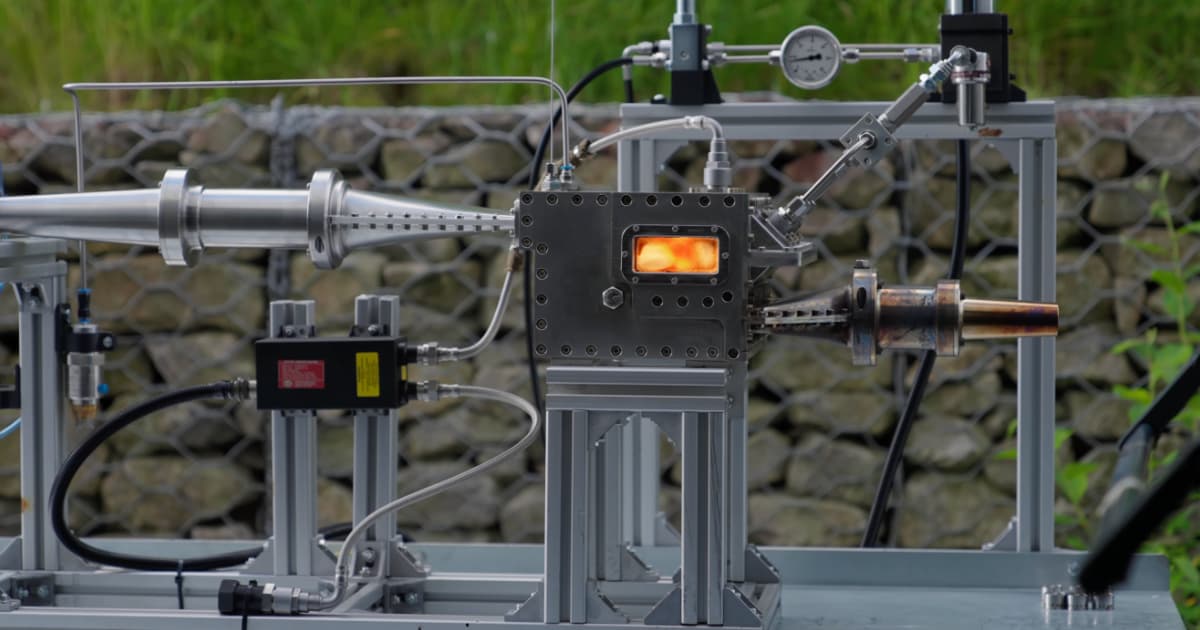
The programme began with fundamentals. Could the team deliver fuel at the right pressure? Could it atomise satisfactorily? Was the igniter correctly positioned? Could the flame be lit and held stably?
That milestone was secured a couple of weeks ago. "Tick, done. That part of it works," Hill confirmed.
Ramping Toward Ground Idle
The next challenge was to drive the combustor through the starter cycle, managing fuel-air ratios through increasingly higher mass flows and pressures. This required the swirler arrangement — which constrains the flame — together with the primary and dilution holes, to establish stable recirculations across a wide operating range.
As expected in a programme of this ambition, the team encountered swirler setup issues and pulsations caused by complex interactions between the fuel system and combustion aerodynamics and thermodynamics. Both were diagnosed and resolved. "All of that's been resolved. Tick, done."
The Air Power Problem
The next hurdle was formidable. To push the combustor toward ground idle and ultimately flight idle, the volume of compressed air required becomes, in Hill's words, "utterly enormous."
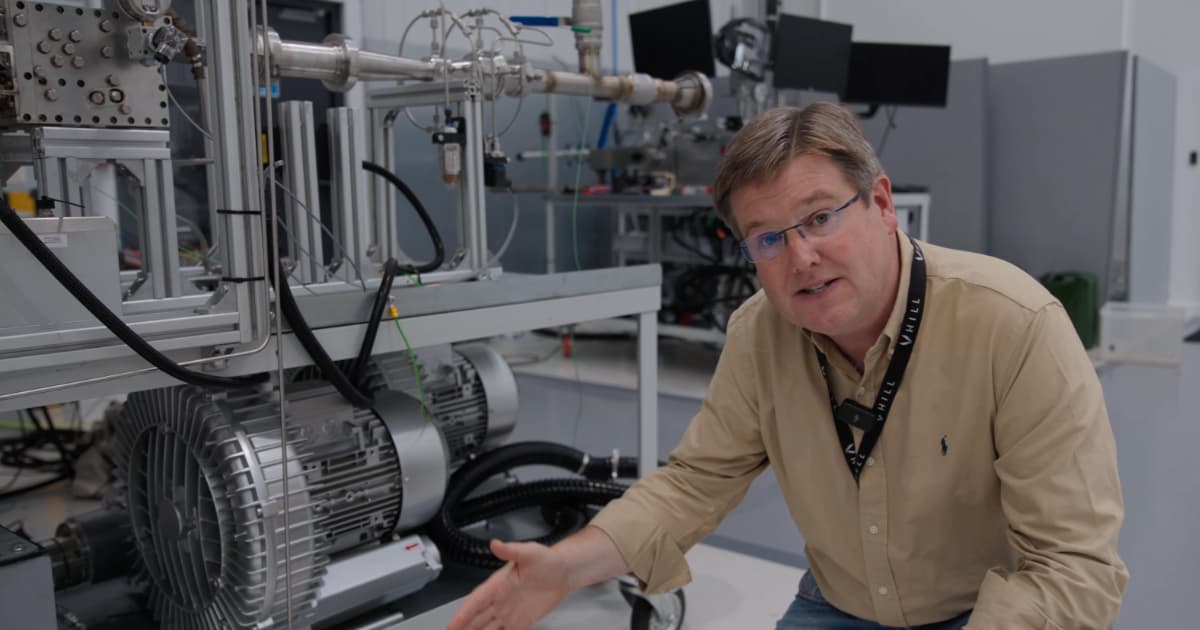
Beneath the test bench, two heavy-duty blowers could barely sustain airflow just past ignition. At maximum power, the GT50's compressor consumes over 1,000 horsepower. Not only does the test rig need vast quantities of compressed air, but that air must also be at the correct temperature and density to simulate true engine conditions.
"So how do you go about getting enough compressed air to drive this thing as hard as a gas turbine engine would do it? Simple. You get a gas turbine engine."
The Solution: An Aircraft Air Starter Unit
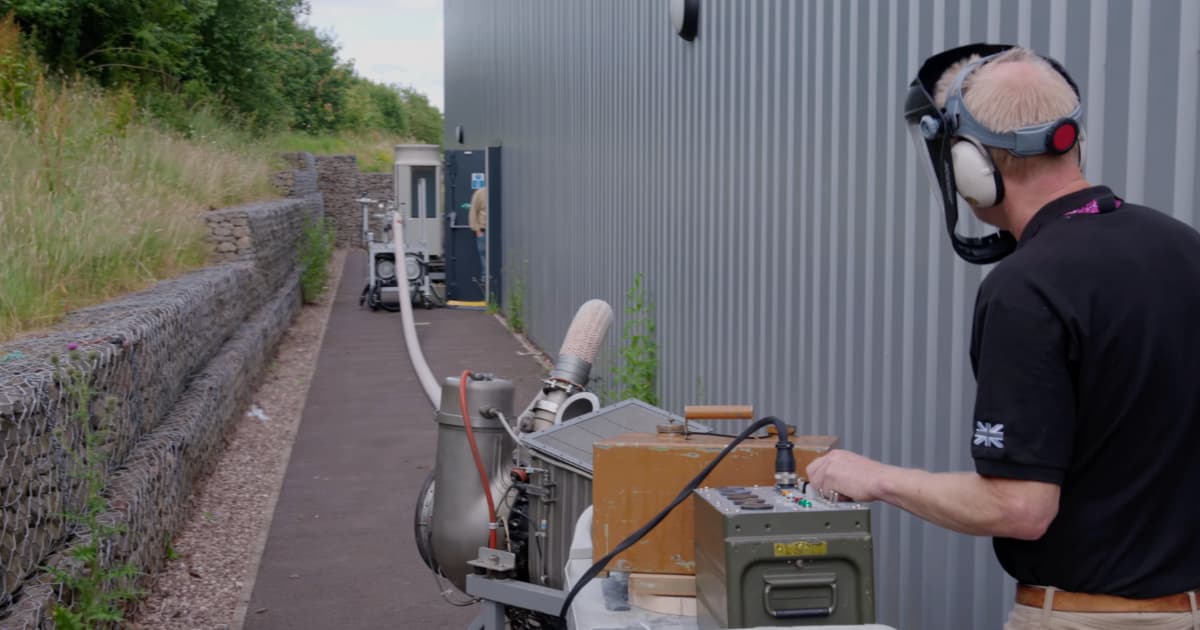
The team sourced an aircraft air starter unit — a 250–300 horsepower gas turbine featuring a double-entry compressor designed to produce far more air than it needs. Originally used to start legacy civil airliners and military aircraft, the unit connects via a large flexible hose to deliver high-volume compressed air directly into the test rig.
As Hill explains, the objective was to drive the combustion system "up to much higher powers, much higher air flows, much higher fuel flows," while confirming robustness, combustion efficiency, and control of delivery temperature. "You can't fix these problems inside the engine," he notes, "and we need to know that we've got control of the combustor delivery temperature, that we're free from pulsations, that we know exactly how to map the fuel as the compressor delivery air goes up and up and up."
"From Zero to Hero": Test Results Beyond Ground Idle
Positioned outside the factory, the starter engine drove compressed air into the compressor delivery rig. The team carefully metered the air and ran the combustor through a succession of higher air-fuel ratios.
The results were immediate and conclusive. The team achieved a solid blue cone, pushed the system to an efficient lean flame, and ultimately reached the lean extinction limit.
"I can now say that all the way up to and just beyond actually the ground idle point for the engine, which is the first checkpoint for the testing programme, the combustion system works just right."
The combustion system has proven itself robust, efficient, and free from pulsations — a major validation for the fuel delivery and control architecture.
Reflections on Engineering Efficiency
The speed and clarity of the result prompted Hill to reflect on how far the team has come. "Gone are the days when we used to design overly elaborate test rigs and control systems and make life trying, trying to be perfect too early. What we've done today is a perfect example of how to do the least to get the most."
By connecting a third-party gas turbine engine to the combustion system, wrapping a simple control system around it, and executing a focused test programme, the team achieved exactly the engineering outcomes required. "We've gone from zero to hero in just a few hours. It's been an incredible day, and it really gives me such a lot of confidence for the test program that we've got ahead of us now, to march GT50 through all of the different stages of testing and development that it needs to be flight ready."

Inside the Mechanical Assembly Lab
While combustion testing advanced outside, work has continued in the mechanical assembly lab — the same space used previously for the MGU and speed reduction gearbox, now housing the prototype GT50 build.
Nose-Down Assembly and Critical Clearances
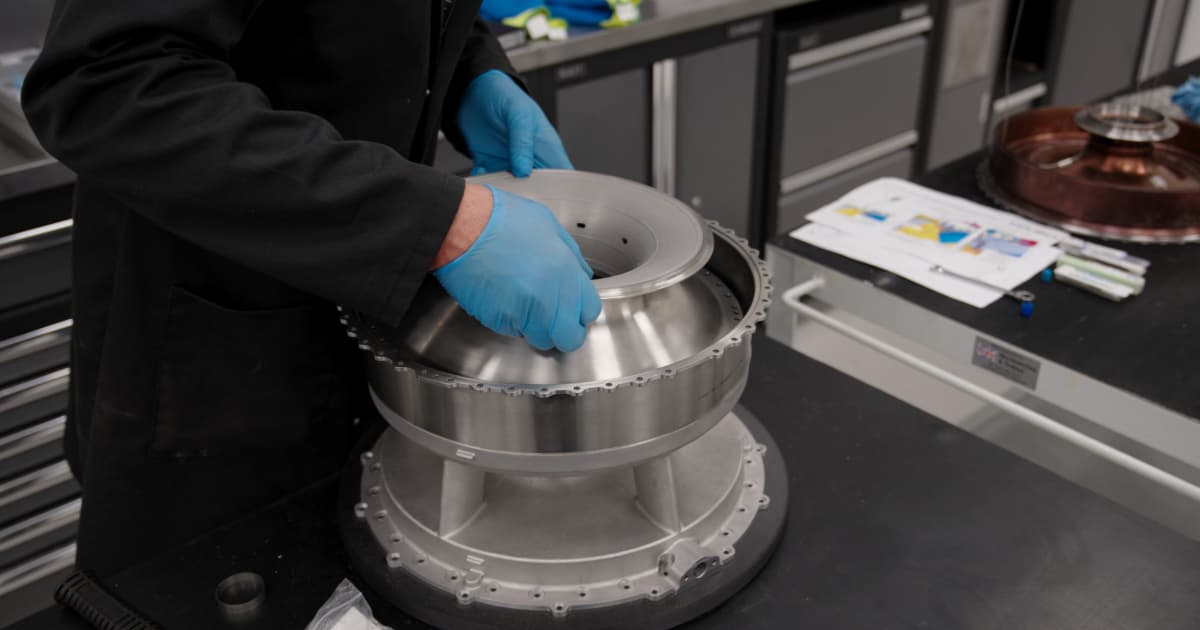
The engine is being assembled nose-down, beginning with the inlet casing. Onto this, the team fits the spring bar and squeeze film damper, followed by the forward gas generator bearing and shaft. The inlet shroud is then located to control the precision tolerances between the blade tips and the stationary frame.
"Getting those tip clearances just right is the difference between having the compressor work stably and to be performant and not," Hill explains. Every part has undergone a full CMM geometric survey, yet getting the components to interact correctly requires repeated assembly and disassembly. "We've had this together and apart, and together and apart, and together and apart, just getting that set up just right."
In production, this process will be faster; for now, the team is aiming for nominal tolerances with wiggle room in both directions. Precision shims control the impeller tip clearance, outlet clearance, and diffuser clearance.
Balanced Rotors and Full Instrumentation
The final rotor build — comprising the impeller, disc, turbine blades, and spring clips — has been dynamically balanced to "really, really tight dynamic tolerances." It has since been broken down and is now being built into the engine.
The prototype is heavily instrumented. Pigtails for pressure sensors, thermocouples, accelerometers, and a variety of other sensors are routed throughout. "We need to be able to understand what's going on inside the engine as we test every little nook and cranny of its operational envelope."
The Road Ahead: Automation and First Engine Runs
With the combustion system proven, the team's focus shifts to automation. Over the coming days, the learnings from the rig will be translated into fuel mappings within the control system, enabling automatic spool-up and spool-down through test points. Coding and testing will proceed immediately, followed by implementation on the prototype engine itself.
Full engine assembly is expected by Monday at the latest. Once complete, the engine moves to the test rig — and the next chapter of the GT50 programme begins.

JOIN OUR GROUP PRESENTATION
Are you interested in the HX50? Book your spot in our group presentation and learn why the HX50 will be better than your current helicopter.
What's in the presentation
Who
Mischa Gelb (aka Pilot Yellow) and Ruben Dias
What
Exclusive full details about the HX50 not yet available to the public
How
30-minute presentation + Q&A
Be part of the journey
Get all the relevant news and updates about the HX50 delivered to your inbox.

HX50
Exterior Concept
Interior Concept
GT50 Turbine Engine
General Aviation 2.0
Hill Digital Cockpit
News & Stories
Technical Details
Range Simulator
Journey to HX50
ADDRESS
Hill Helicopters
Unit 3, Shackleton Way
Stafford, ST16 1GY
United Kingdom
Contact
General Enquiries:
+44 (0) 1384 590700
Accounts:
+44 (0) 1384 590700
Sales:
+44 (0) 1889 228040
hello@hillhelicopters.com
ADDRESS
Hill Helicopters
Unit 3, Shackleton Way
Stafford, ST16 1GY
United Kingdom
© 2026 HILL HELICOPTERS