

55 GT50 runs and a frozen Gen Two fuselage for the HX50
55 GT50 test runs to 85.8% N1, a clean borescope, and an HX50 Gen Two fuselage now frozen and released to manufacture. Inside the November programme update.
7 Nov 2026
After a period of necessary focus on developing and prototyping the GT50, attention at PC1 has shifted firmly back to getting the HX50 itself completed, prototyped and into the air.
Ten and a half hours, one part at a time
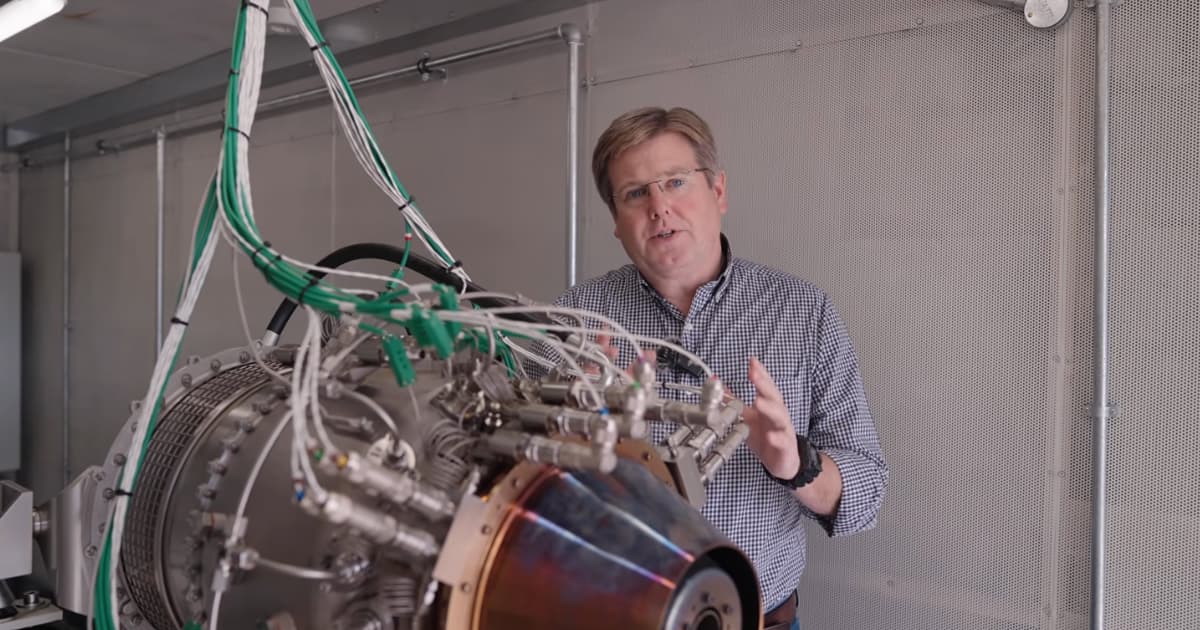
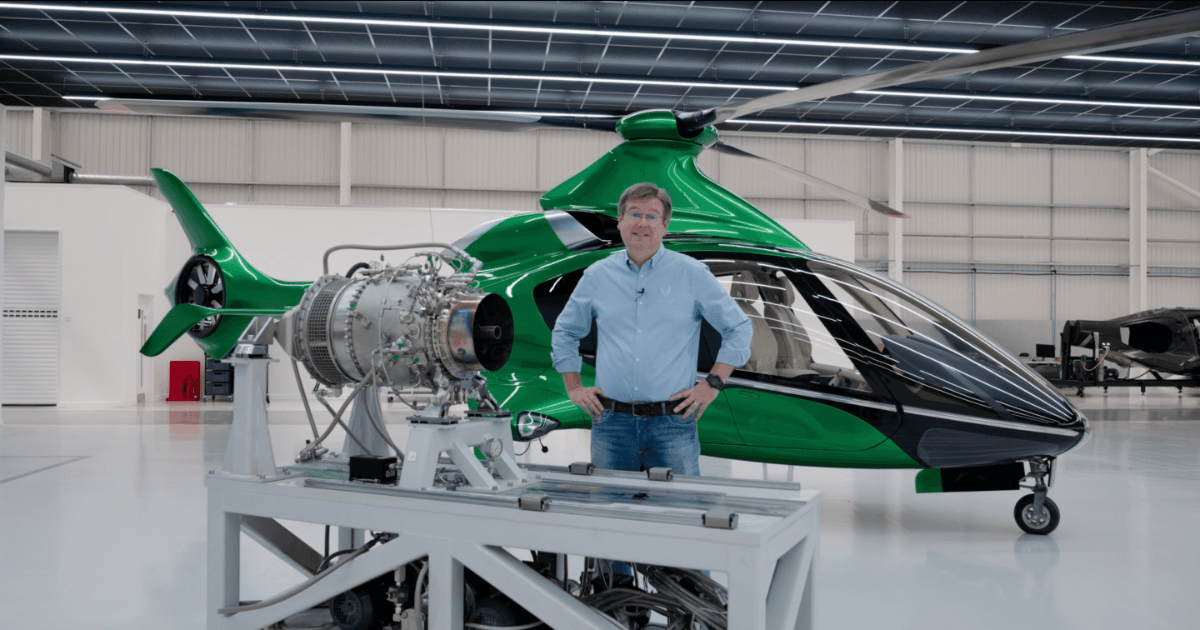
The longest run on the GT50 so far lasted one hour and 35 minutes, climbing progressively to 85.8% N1, near the top of the operating envelope. When it ended, the borescope went in. The engine was still as good as new inside. No rubs, no degradation of the hot parts, no carbon deposits.
That is where the prototype stands after 55 test runs in the cell at PC1, and about 10.5 hours in total. Ten and a half hours may not look like much.
Test, strip, rebuild, test
The tests right now are short and deliberate. Each one proves that an individual part of the engine functions correctly, and that it keeps functioning at a different operating point. Then the engine is stripped, reconfigured and run again. Test, strip, rebuild, test. The stop-start is the method, and the hours are low on purpose.
Three things have come out of it.
- The fuel system is validated. Starts are cool, light-off is reliable and predictable.
- Combustion is close to complete. Almost 100% of the fuel entering the combustor now burns, releases its heat and turns into power. Once pressure builds, combustion is stable and the temperature distribution is uniform as the hot gases leave the combustor for the nozzle guide vane and the turbine.
- The structure is holding. Rotor components inspected through the engine's inspection provisions are standing up well, including to the hot running of the early familiarisation period. The bearings show no rise in vibration and steady temperatures. What remains is the lubrication tuning, another one to two weeks to set the lubrication ports exactly as they should be.
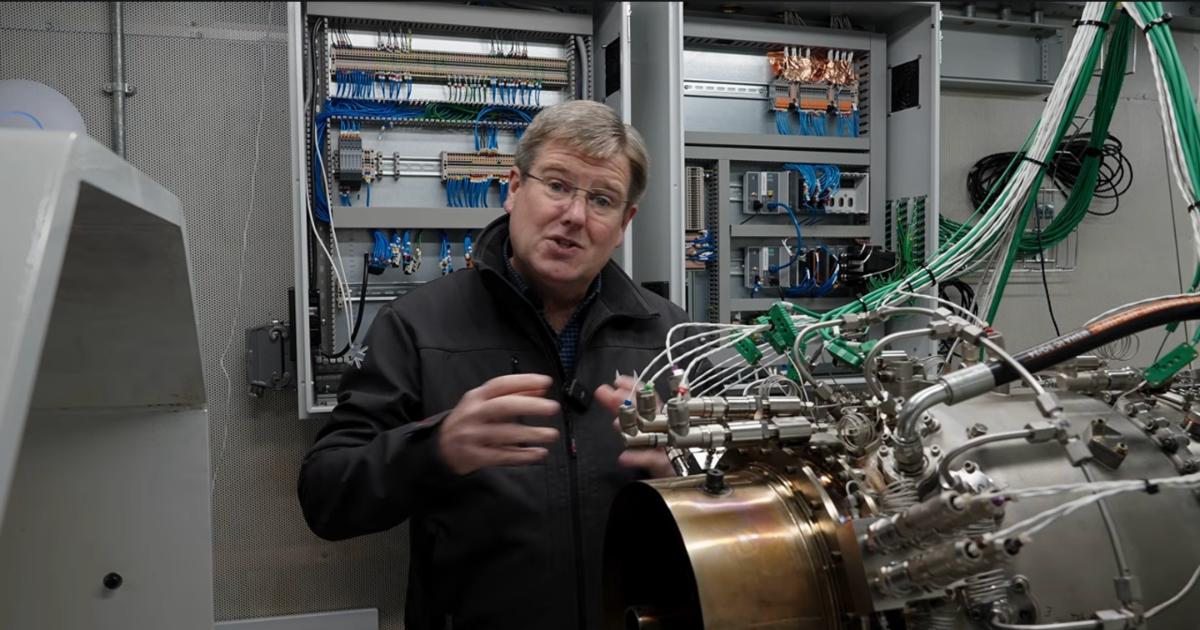
The engine is starting to run itself
With the core functions working, more of the FADEC is being rolled into the engine. It can now perform a semi-automated start and an automated shutdown. Next it will hold an N1 speed by itself as power moves up and down the range. The algorithms run first on the test cell control system. Once validated and characterised there, they move onto our own FADEC hardware and run as a self-contained unit.
Two years for an in-house fuel nozzle
The nozzles are the difficult part, and the work has run in the background for two years. An injector needs sufficient bandwidth, sufficient robustness, and the ability to atomise fuel to a sufficiently small Sauter mean diameter. At this engine size, that is one of the hardest combinations to achieve.
Engines two and three in the machine shop
Engine two is in production in the machine shop, an insurance policy to keep the test programme running if engine one comes offline for a stoppage, a breakage or a reconfiguration. Engine three is the flight engine.
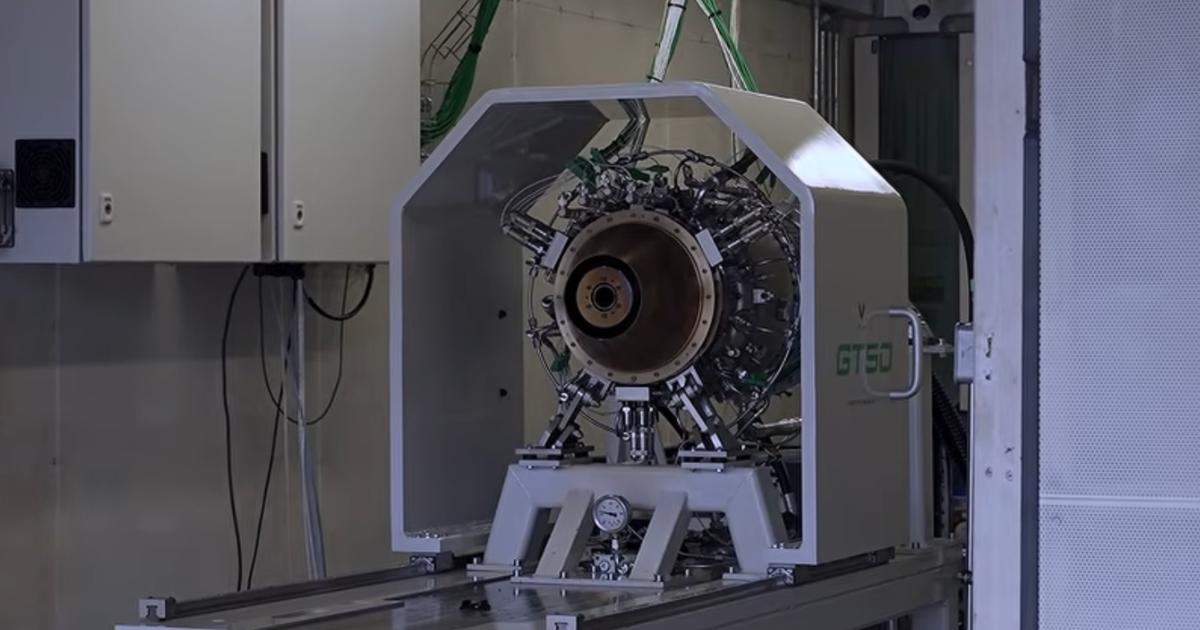
The aircraft was being rebuilt behind the engine
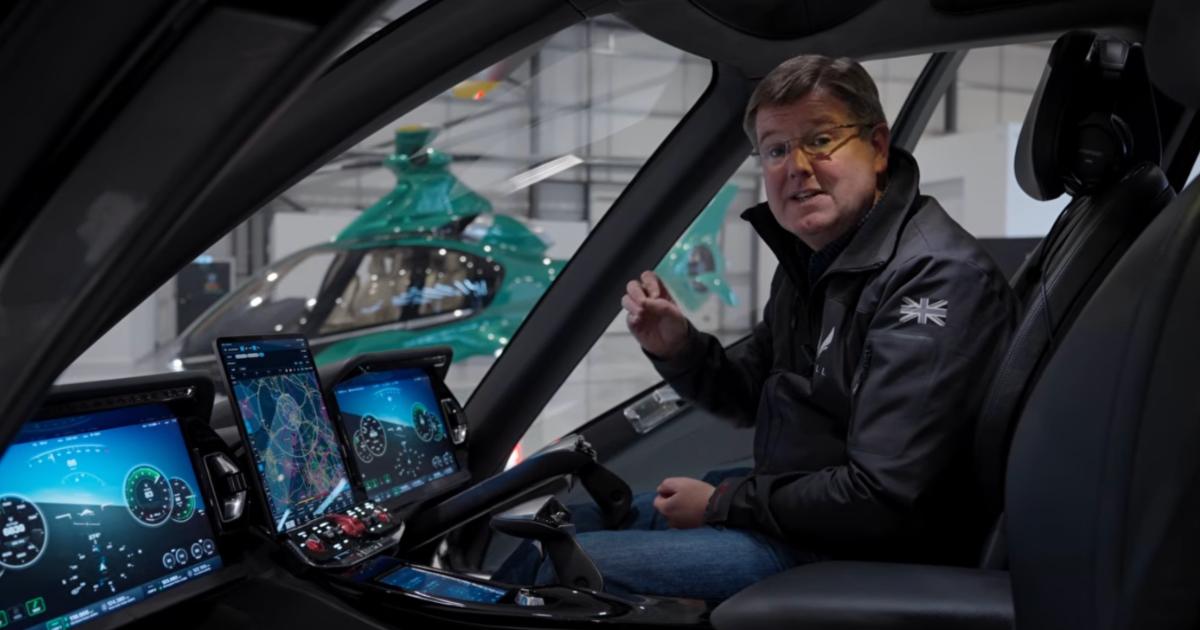
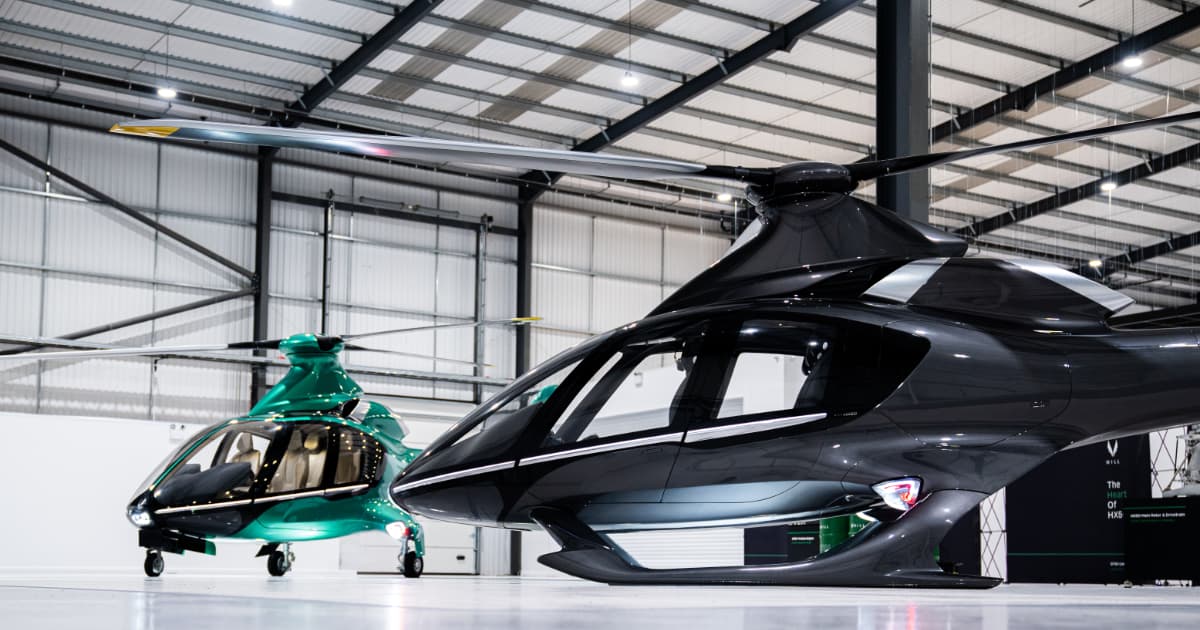
The Gen Two fuselage is the story behind the engine story. It simplifies the structural architecture of the airframe and drivetrain, improves the aerodynamics significantly, cuts weight and cost with a new method of manufacture, and makes the aircraft easier to inspect.
Crashworthiness moves with it. There is more space beneath the floor, giving a bigger crumple zone. The crashworthy seats attach to the airframe in a new way, and their performance is extended further.
Decoupling the fuselage from rotor vibration
The structural dynamics have had the most exhaustive attention. We have used finite element methods to place and adapt the fuselage's modes of vibration, decoupling them as far as possible from the forcing functions of the main rotor, the tail rotor and the other rotating components. That work should position the HX50 as the smoothest aircraft in the short light single class.
Three-point locking doors
The doors are finished. A new structural design, better sealing, and an all-new three-point locking mechanism that holds the door securely against its weather seals. A new handle and latch are in, along with central locking, the signature lighting and the door cards and trim.
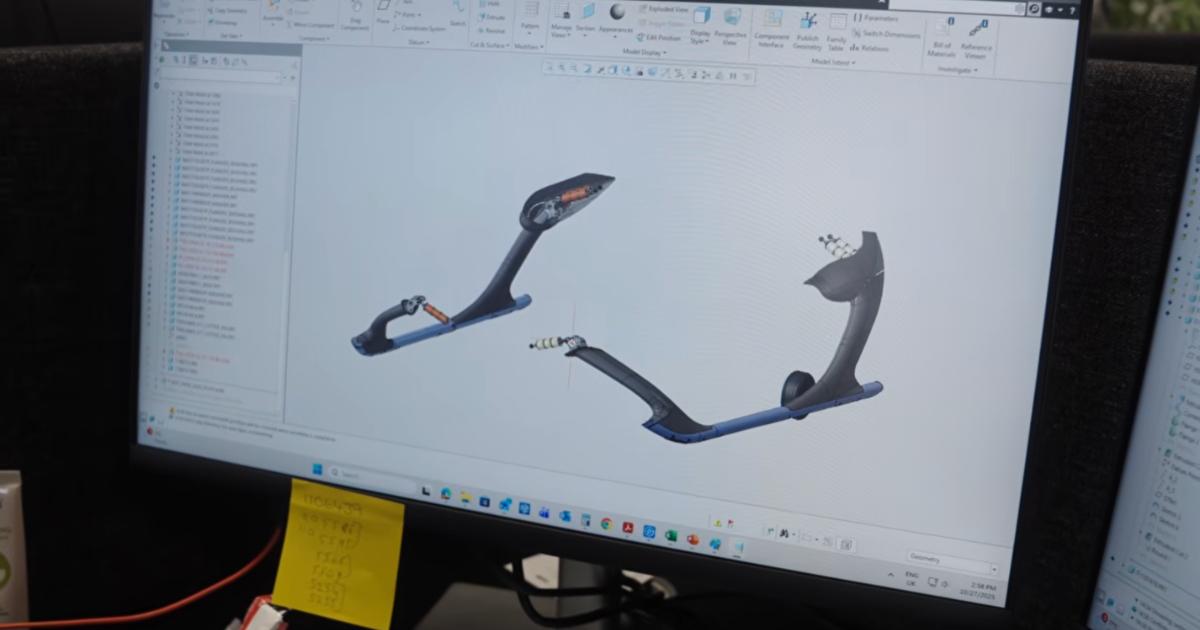
Nineteen tools for the first flying structure
The rear of the prototype needs a suite of 19 patterns, tools and moulds, built in-house. Each starts as a fabricated steel structural frame. A blocking surface forms the vacuum barrier, the core base block is bonded on and machined nearly to shape, then fibreglass and tooling paste go on before a final pass on the machine produces the finished pattern surface. The master mould is taken from that.
The horizontal stabiliser reaches tooling first
The first of them, in the shop now, is the lower surface of the new one-piece horizontal stabiliser — the very first structural component of the flying HX50 to reach tooling. Over the next week or so it becomes a mould. The upper surface has already been pasted over in the composite shop. The stabiliser itself sits on the engine deck and runs down the structural tail boom.
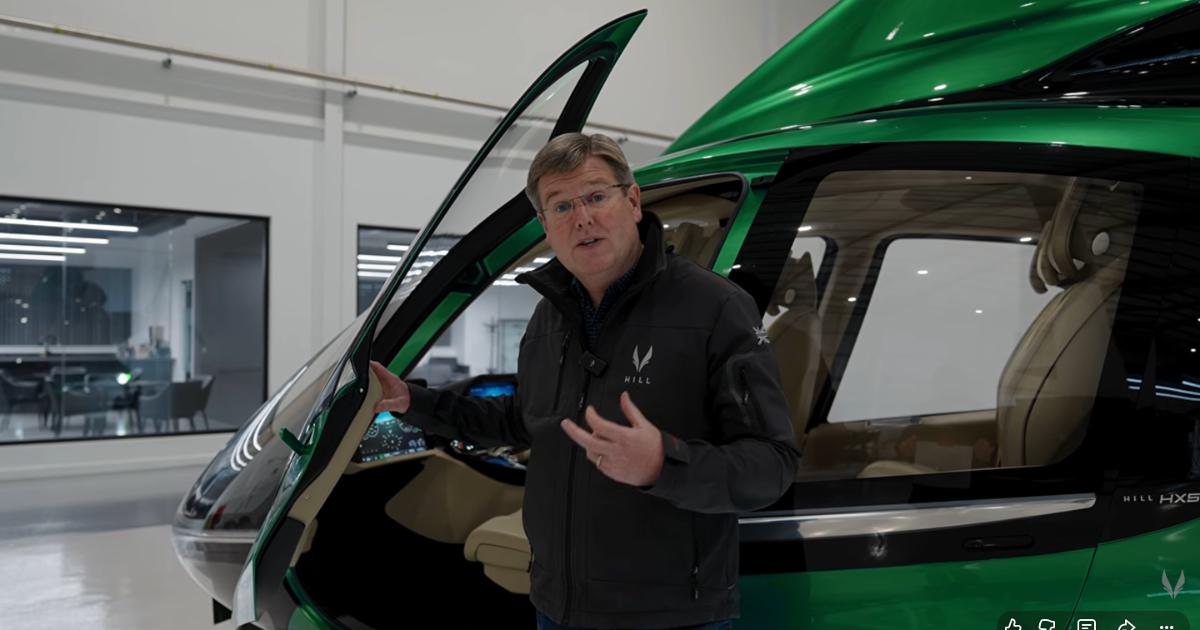
The parts that waited for the engine
The wheeled gear nears the test bench
The wheeled undercarriage was designed and released to manufacturing some time ago. Some of those parts then sat on hold while we pushed GT50 through the machine shop.
The last two months have pushed it back through, and the first main and nose landing gear, with all its actuation, is nearly at the test bench.
The parts are exacting. Tight tolerances, surface finishes specified for wear and corrosion resistance, sealing elements that all have to work together to absorb a heavy landing and to manage ground resonance with a multi-bladed rotor. The nose gear's upper cylinder strut is machined from solid today. In production it will be cast to near-net shape and finish machined, which holds the cost down.
Skids built around crash loads and ground resonance
Skids look simple. They are not. They take the limit and ultimate crash loads, protect the fuselage in a heavy landing, limit the loads passed up into the airframe, meet a demanding fatigue life, and stay light. Fairing them in to cut the drag of a fixed undercarriage adds complexity. The multi-bladed rotor adds the hardest part: decoupling the rotor's lead-lag modes from the fuselage's rigid and flexible modes, or the aircraft risks ground resonance.
The production-intent design is a formed aluminium tube with bolted-on horizontal tubes beneath, cowled and faired to keep the look the HX50 has always had. The skids meet the stub wings slightly differently now, and the fairings around them have been tweaked, so that a skid deforming in a heavy landing does not damage the composite fuselage beneath it.
Stability augmentation that does not twitch the cyclic
The HX50 is a big helicopter, so its flight controls are hydraulically boosted, and every aircraft carries a 2-axis autopilot as standard with stability augmentation and the higher modes. Fitting that autopilot at the factory allowed something a retrofit never can: the stability augmentation actuators and the autopilot actuators combined into one modular unit above the cabin roof, driving the swash plate and the main rotor.
Because the functions are separated inside the module, the stability augmentation works behind the scenes. You will not see the cyclic twitch while it damps pitch and roll. The only movement you see is the autopilot working to a new heading, altitude or nav track.
Blades and seats
Seventeen prototype blades and an upgraded hub
The last 18 months have gone into performance and ride quality, to make the HX50 one of the smoothest and easiest to fly helicopters in its class. To get there, the main rotor hub and the rotor system itself have had a significant upgrade.
Blade production has been optimised in parallel, cutting the labour content and the build time. Seventeen prototype blades are built. The last batch of nine concentrated on the quality and production processes behind every HX50 blade.
Three attempts to take the foam out of the seat
The crew seat had to balance structure and crashworthiness with ergonomics across the widest range of pilot shapes and sizes, with automotive-style trim and a price point. The composite tub, the metallic components, the trim and the foam are complete. Since then the production team has been cutting the time and cost out of each build, for the 5,000 seats a year that continuous production needs.
The first design was a structural optimum, and nothing else. Formed box sections up both sides of a foam-cored seat bucket, laid up and closed in a double A-side mould. Probably the lightest way to build it. Extremely labour-intensive.
The second split the seat into front and rear mouldings and cold bonded them together, easing the worst of the laminating in tight spaces. The third removed the foam cores entirely, with front and back skins moulded so they cold bond to each other directly. That one is close to the production method.
Automotive bolsters and field-replaceable covers
Ergonomics ran in parallel. The sweeping curves of the original returned over the comfort surfaces, with more automotive bolsters at the side and the cushion tucked in at the back, and the grooves in the foam are salvage grooves for the double stitching.
The covers are field replaceable. They wrap the foam onto the carbon and Velcro to the seat's return, with a back panel over the rear. The final set of trim covers arrives in the next two or three days — the production-intent seats, which fly in the prototypes and go straight through to production.
Sliding front legs and bulkhead-mounted rears
The front crew seats sit on aluminium legs that slide fore and aft for different sized pilots. The rears are bulkhead-mounted, and those components are already through the machine shop, ready to test once the final production optimisation steps are complete.
With the GT50 progressing through the test cell, the focus across PC1 is now firmly on completing, prototyping and flying the aircraft itself.
JOIN OUR GROUP PRESENTATION
Are you interested in the HX50? Book your spot in our group presentation and learn why the HX50 will be better than your current helicopter.
What's in the presentation
Who
Mischa Gelb (aka Pilot Yellow) and Ruben Dias
What
Exclusive full details about the HX50 not yet available to the public
How
30-minute presentation + Q&A
Be part of the journey
Get all the relevant news and updates about the HX50 delivered to your inbox.

HX50
Exterior Concept
Interior Concept
GT50 Turbine Engine
General Aviation 2.0
Hill Digital Cockpit
News & Stories
Technical Details
Range Simulator
Journey to HX50
ADDRESS
Hill Helicopters
Unit 3, Shackleton Way
Stafford, ST16 1GY
United Kingdom
Contact
General Enquiries:
+44 (0) 1384 590700
Accounts:
+44 (0) 1384 590700
Sales:
+44 (0) 1889 228040
hello@hillhelicopters.com
ADDRESS
Hill Helicopters
Unit 3, Shackleton Way
Stafford, ST16 1GY
United Kingdom
© 2026 HILL HELICOPTERS
Pre-orders closing
HX50 and HC50 pre-orders close at 23:59 GMT on Thursday 19 November 2026.
Pre-orders closing
HX50 and HC50 pre-orders close at 23:59 GMT on Thursday 19 November 2026.