GT50 Engine Testing: Progress Towards Full Power
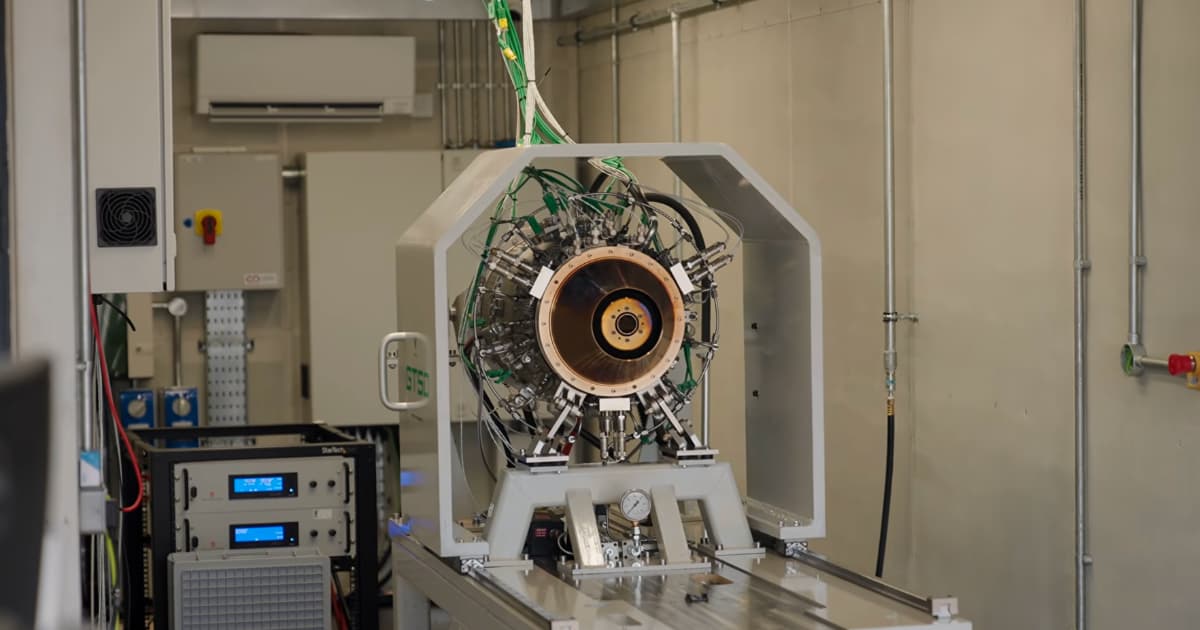
Our GT50 engine testing programme at PC1 has reached about 72% N1, with several multi-hour runs confirming stable operating conditions.
20 Oct 2026
Alongside detailed lubrication mapping, we have refined the combustion system and tested the automatic start sequence intended for our FADEC. Each step gives us a clearer picture of how the engine behaves before we push it further.
Mapping the engine, one operating point at a time
We have completed a series of comprehensive tests, checking key functions and critical parameters across the operating points explored so far. Several multi-hour runs have allowed the engine's systems to settle into steady-state conditions and reach thermal equilibrium.
Much of our recent work has focused on the detailed lubrication requirements of the bearings, gears and other critical areas. These measurements let us tune the installation of our own oil pump on the front of the engine. Before increasing the demands on GT50, we need to understand what is happening in its internal cavities and lubrication systems, and make sure every area receives what it needs.
A couple of lubrication runs remain to wrap up this phase, after which we will be in a position to begin pushing GT50 towards 100% power.
The results are encouraging. Operation is smooth, with core and cavity temperatures broadly where we expected them to be. We have resolved the last of the small oil leaks identified during initial runs, and internal oil seals are performing reliably. Across every increment, the compressor, diffuser and turbine blades are behaving as designed.
The job now is to build on these foundations methodically, rather than skip ahead.
A wider, more stable combustion range
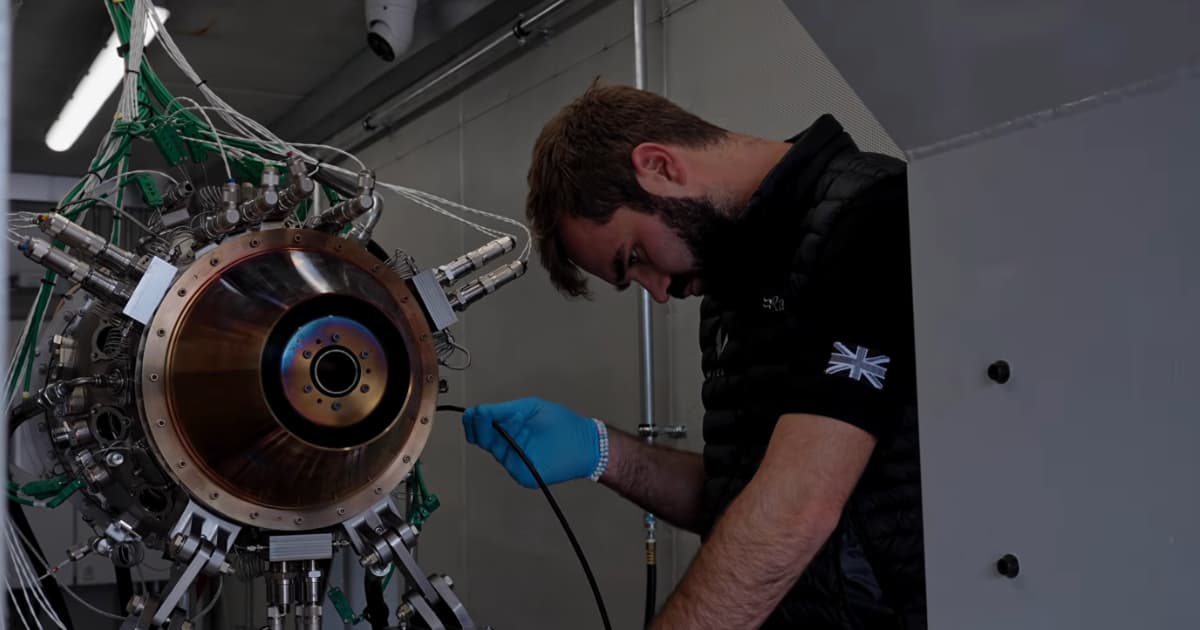
Alongside the core engine tests, we have continued refining both the air and fuel sides of the combustion system. On our Rufus 3 test rig, we have tested different swirlers and optimised the combustion liner's hole patterns, using feedback from GT50 to guide that work.
The latest phase of those tests produced an optimised swirler geometry. Our aim was to achieve stable combustion across the widest possible range of fuel-air ratios at each operating point. That allows ignition with less fuel and smooth acceleration up and down the range, without the flame going out because the mixture is too rich or too lean.
We have fitted an updated set of swirlers and larger fuel nozzles to the engine. The findings from Rufus 3 have translated directly into GT50 testing, with three important results:
- Essentially 100% combustion efficiency at the bottom of the operating range. At this difficult operating condition, we are effectively converting all of the fuel into heat.
- The widest operating range achieved on GT50 so far. The combustion system supports a broader range of stable operation.
- Cooler, easier and more controlled ignition and starting. This helps us bring the engine up to steady-state operation more gently.
Our recent runs have focused on tuning that transition: using the lowest practical fuel input, keeping temperature changes gentle and achieving smooth acceleration. There are still details to refine, but the combustion system is now behaving broadly as we intended.

Fuel nozzles with approximately 25:1 turndown
A small engine needs its fuel nozzles to handle two very different demands: low fuel flow for a cool start and much higher flow as it approaches maximum power. Good atomisation and emissions characteristics are required across that range. Achieving this is particularly difficult at GT50's size, especially with a modern annular combustor chosen for a compact engine configuration.
Over the past year, we have explored numerous ways of manufacturing the nozzles. The latest nozzle on the test rig achieves a turndown ratio of approximately 25:1: it can deliver fuel flow from about 4% to 100% of the maximum.
It does so at modest fuel pressures. That matters beyond the nozzle itself, because it keeps the fuel pump and fuel metering valve designs simpler.
On the rig, we can demonstrate and measure the fuel-flow range needed, from a cool start to the higher flow required to generate the full 500 horsepower.
Testing the start sequence intended for our FADEC
Until this milestone, our engine runs had been controlled manually. The starter-generator, lubrication and scavenge systems were fully instrumented, but our team retained manual control so that each parameter could be tuned. Starting also required manual coordination of the starter, ignition and fuelling.
In our recent testing, we implemented the automated start sequence developed for the FADEC. For the first time, GT50 essentially started itself at the press of a button.
The sequence was well coordinated and produced the coolest start recorded on the engine so far. Some tuning and fuel-delivery plumbing work remain, with further refinement needed as we expand the operating range. This is an encouraging first step in introducing preliminary FADEC features, rather than the completion of the engine-control programme.
Preparing the test cell for higher demands
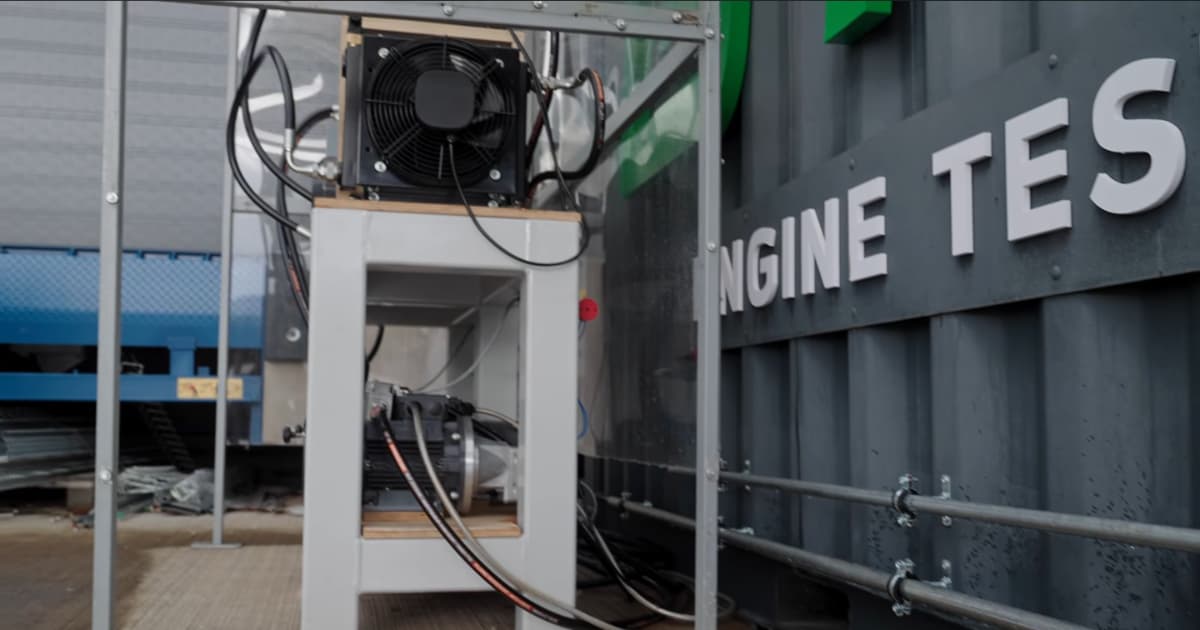
As we increase engine speed and power, the test installation must develop with it. Several changes are underway to prepare the rig for higher-speed operation and longer runs:
- Hard piping: flexible hoses on hotter lines, including the scavenge lines, have been replaced with hard piping connected to the external heat exchangers.
- Fuel-system changes: modifications accommodate the larger nozzles and their control.
- Metered air inlet: the inlet assembly and its instrumentation are complete, with fitting still to follow.
- Exhaust treatment: an exhaust silencing system and ductwork are being built to route exhaust along the container and safely out through the roof.
We expect around another week or two of testing in this configuration before taking downtime to fit the modifications, preparing the test cell for the higher-speed and longer endurance runs ahead.
Why engine hours are not yet the main measure of progress
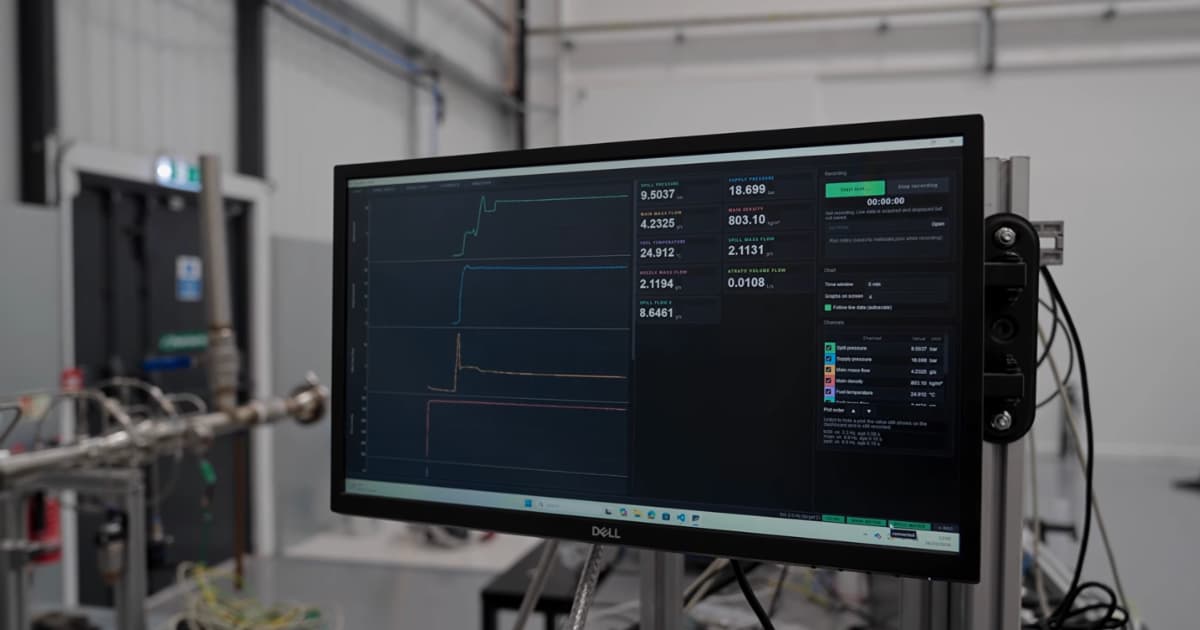
Hundreds of parameters need checking at each design point. Short, targeted runs let us stabilise the engine and measure cavity temperatures and pressures, vibration levels, and lubricant feed and scavenge temperatures and pressures.
A five-minute test can require an hour, two hours or half a day of setup, reconfiguration and analysis before the next run. Running hours grow slowly at this stage, while our understanding of the engine grows rapidly.
This work gives us confidence to increase speed and power. We are bringing more engine systems into use, testing and calibrating them, and checking that the components perform their intended functions across the conditions they encounter.
We anticipate roughly two to four more weeks of system characterisation towards 100% power, followed by a strip-down and inspection before endurance testing. At that stage, we plan to run at least 10 hours a day, so accumulated hours should grow quickly.
Engine two in production, engine three planned
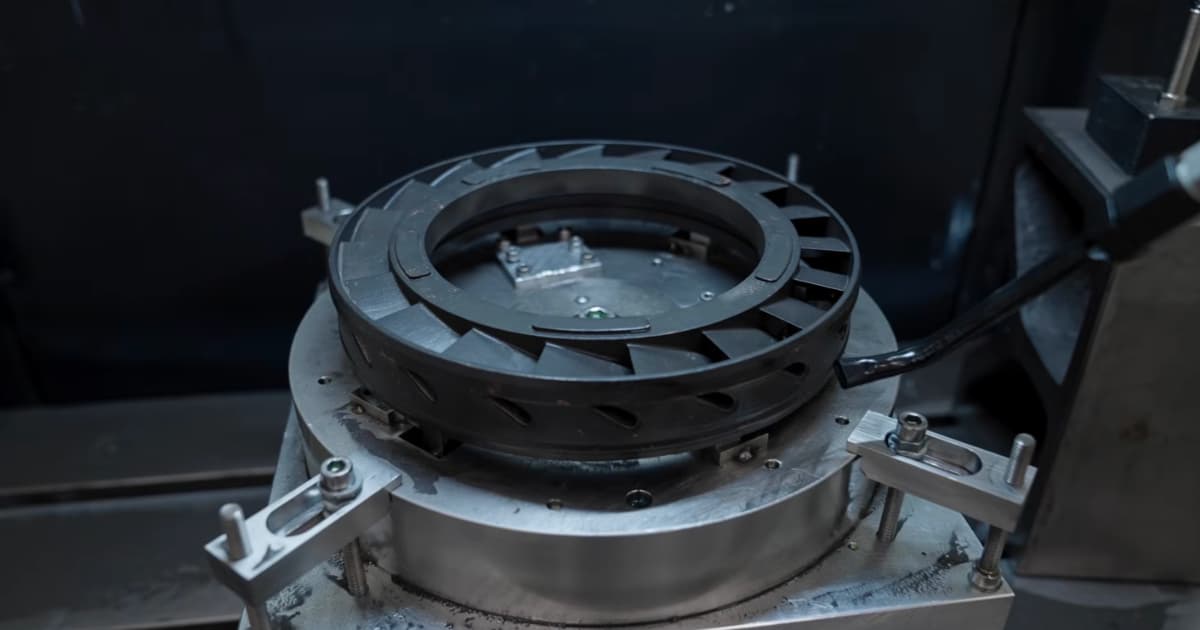
With the first engine performing so well and no major design revisions needed for the core rotating assemblies, production of engine two is already underway in the machine shop. We expect engine two to be ready around year-end or early January, with engine three slated to begin production shortly after.
Additional engines serve two purposes. They provide a backup if harder testing damages anything, because some questions can only be answered by running the engine under greater demands. They also allow us to accelerate longer-term testing by separating different tasks.
With two engines available, one can focus on accumulated hours and particular operating cycles while another undergoes repeated start-stop cycles. That gives us more scope to test endurance and repeated starting alongside one another.
An update on the HX50
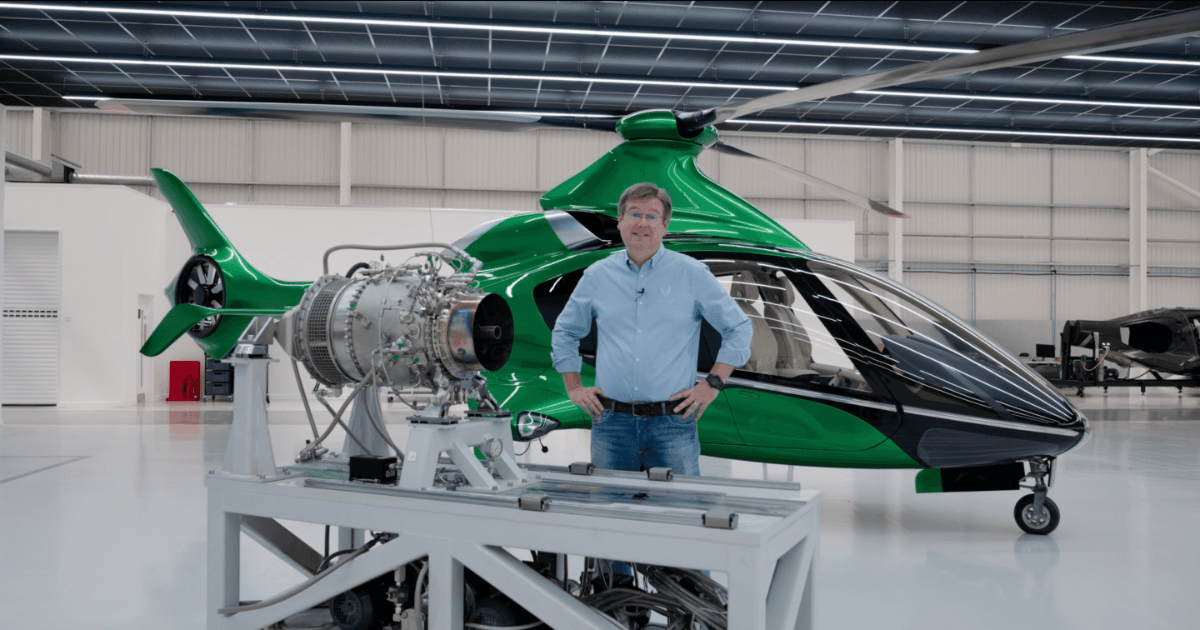
While engine testing takes centre stage right now, development across the HX50 airframe has been advancing just as quickly.
In our next update, we will shift focus back to the aircraft itself, sharing detailed progress on composite rotor blade manufacturing, crashworthy seating, the integrated servo actuators and flight controls, landing gear structural testing, and the rollout of the Generation 2 production-intent fuselage.

JOIN OUR GROUP PRESENTATION
Are you interested in the HX50? Book your spot in our group presentation and learn why the HX50 will be better than your current helicopter.
What's in the presentation
Who
Mischa Gelb (aka Pilot Yellow) and Ruben Dias
What
Exclusive full details about the HX50 not yet available to the public
How
30-minute presentation + Q&A
Be part of the journey
Get all the relevant news and updates about the HX50 delivered to your inbox.

HX50
Exterior Concept
Interior Concept
GT50 Turbine Engine
General Aviation 2.0
Hill Digital Cockpit
News & Stories
Technical Details
Range Simulator
Journey to HX50
ADDRESS
Hill Helicopters
Unit 3, Shackleton Way
Stafford, ST16 1GY
United Kingdom
Contact
General Enquiries:
+44 (0) 1384 590700
Accounts:
+44 (0) 1384 590700
Sales:
+44 (0) 1889 228040
hello@hillhelicopters.com
ADDRESS
Hill Helicopters
Unit 3, Shackleton Way
Stafford, ST16 1GY
United Kingdom
© 2026 HILL HELICOPTERS